Doing Nothing For Now
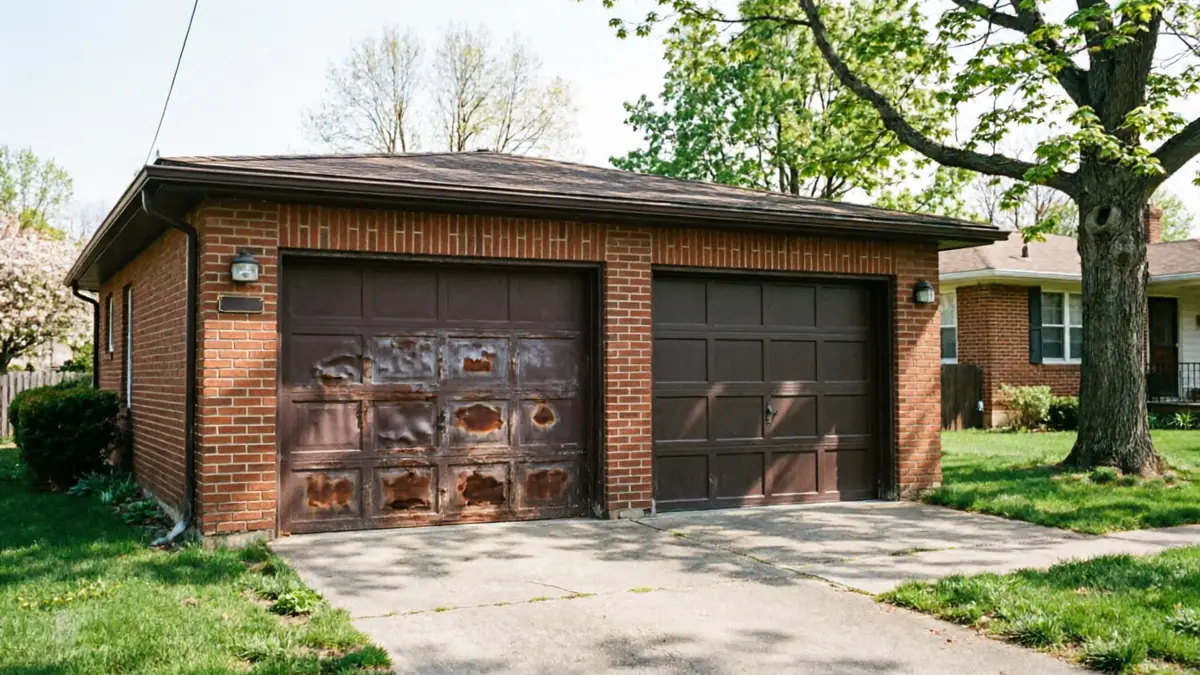
Most houses on this side of the Twin Cities went up between 1950 and 2002, with the bulk of that stock dating to the 1960s and '70s. A door installed when a Maplewood rambler was built in, say, 1968 has had over fifty winters to work its rollers loose and pit its tracks. If yours still opens and closes without binding, there's no rule that says you have to replace it. A door that's stiff in January but fine the rest of the year is often a lubrication and hardware problem, not a replacement problem. We'll tell you that straight if it's true, even though a repair call is a smaller ticket than a new door. The honest line: once the steel skin is rusted through at the bottom panel or the torsion spring has been wound and rewound past its rated cycles, you're not fixing it anymore, you're renting time. For a lot of the original-era doors still in service around here, that line got crossed a while back. Waiting isn't wrong, but it has a cost of its own, which the next section gets into.
The Cost of This Job
We're not going to hand you a number here, because the right one depends on door size, insulation, opener compatibility, and what's underneath the current door once we pull it. What we can tell you is what drives the cost up or down in a house like the ones around Maplewood. Homes from the 1960s-70s wave often have narrower openings and older jamb framing than newer builds, which can mean more carpentry to fit a modern insulated door correctly. A median household income of $93,233 across this service area puts most jobs here in a middle range of door and opener packages, not the bargain-bin single-layer steel doors and not the high-end custom wood either. Owner-occupied houses make up the bulk of the roughly 101,384 owner homes across the area, and owners tend to ask about long-term value over the cheapest upfront number, which changes what we recommend. If your house still has its original hardware from that 1975 median build year, expect some of the quote to go toward bringing tracks and springs up to current sizing, not just the door slab itself.
What Is Going On
When a door built during that 1950-2002 run starts failing, it's rarely one thing. The panels were often made with thinner steel than what's sold today, so forty-plus years of door slams and temperature swings leave waves and soft spots you can see in low light. Torsion springs from that era weren't always sized to the cycle counts manufacturers use now, so a spring that's original to a 1970s build is past its design life even if it hasn't snapped yet. Add in openers that have been swapped once or twice over the decades, sometimes without updating the travel limits or force settings to match a sagging door, and you get a system where each part is quietly compensating for another part's wear. That's the pattern we see across the older stock in this area - not a single dramatic failure, but a slow stack of small ones. When we come out, we're checking the whole chain: door, track, springs, cables, opener, not just whichever part made the noise that got you to call.
What the Weather Here Does to It
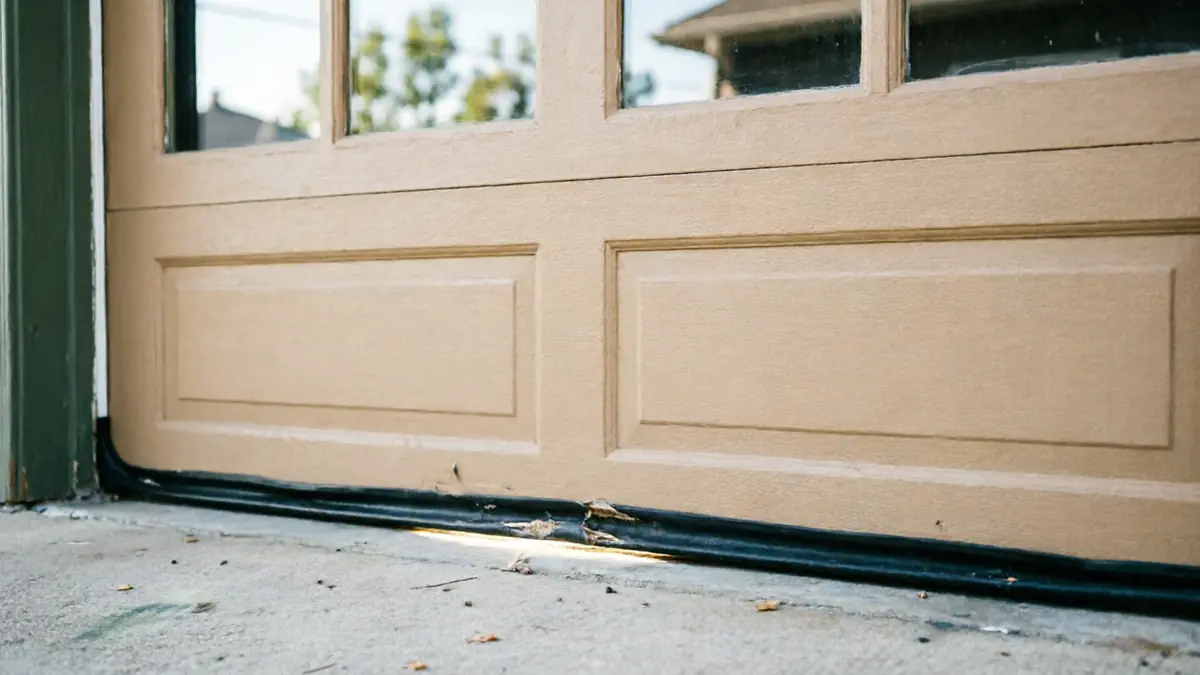
This is a cold-climate area, and that matters more to a garage door than most owners expect. Steel contracts in deep cold, which tightens tolerances on tracks and rollers that were already worn loose from decades of use. A door that rolls fine in August can bind or jump the track in January once the metal shrinks that half-millimeter that used to not matter. Cold also stiffens the lubricant on older rollers and hinges, which is why a lot of the service calls we see in the coldest stretch are doors that worked the day before and suddenly don't. If you're replacing a door anyway, this is where insulation and weatherstripping choices earn their keep in a climate like this one - a gap at the bottom panel that's a minor draft in October becomes a real heat-loss point once temperatures drop and stay down. We'll talk through insulation ratings as part of any replacement quote, because in a cold-climate area that detail isn't cosmetic, it's functional.
Talk to a local pro
Garage door trouble in Maplewood?
Same-day service with honest, upfront quotes.