Doing Nothing For Now
Not every noisy door needs a truck out that day. If your door still opens and closes square, the spring isn't snapped, and the noise is a dry roller rather than a grinding gear, you can often wait a few weeks. What you shouldn't wait on is a door that's started reversing itself on the way down, or a cable that's frayed at the drum - those get worse fast, not slow.
Here's the honest limit on that advice: a lot of houses in this part of the service area, from Maplewood out through North St. Paul and Little Canada, still run the original hardware from when they were built, somewhere in the 1950 to 2002 window, with most of it dating to the 1960s and 70s. Parts for that era aren't always sitting on a shelf. If your torsion spring is sized for a door track nobody makes anymore, we may need a few days to source the right part rather than swap it same visit. That's not us dragging our feet - it's the reality of a door that's older than the technician standing in front of it.
The Cost of This Job
We can't give you a number without seeing the door, and anyone who quotes a flat rate over the phone for a job they haven't looked at is guessing. What we can tell you is what drives the cost up or down on houses like the ones around here.
A straight torsion spring replacement on a door built to original 1960s-70s spec is usually the simplest job we do, because the hardware is standard for its age. Where it gets more involved is when the opener, track, and springs have been replaced piecemeal over the decades - which happens a lot in houses pushing fifty-plus years old - and nothing quite matches. Mixed-era hardware means more diagnosis time before we touch a wrench, and sometimes a part that has to be special-ordered instead of pulled off the truck.
If the door itself is original steel from the 1960s or 70s, replacement sometimes makes more sense than another repair, especially once the panels have dented or the seals have shrunk past what weatherstripping can fix. We'll tell you straight when that's the case instead of patching something that'll be back in your driveway in a year.
What Is Going On
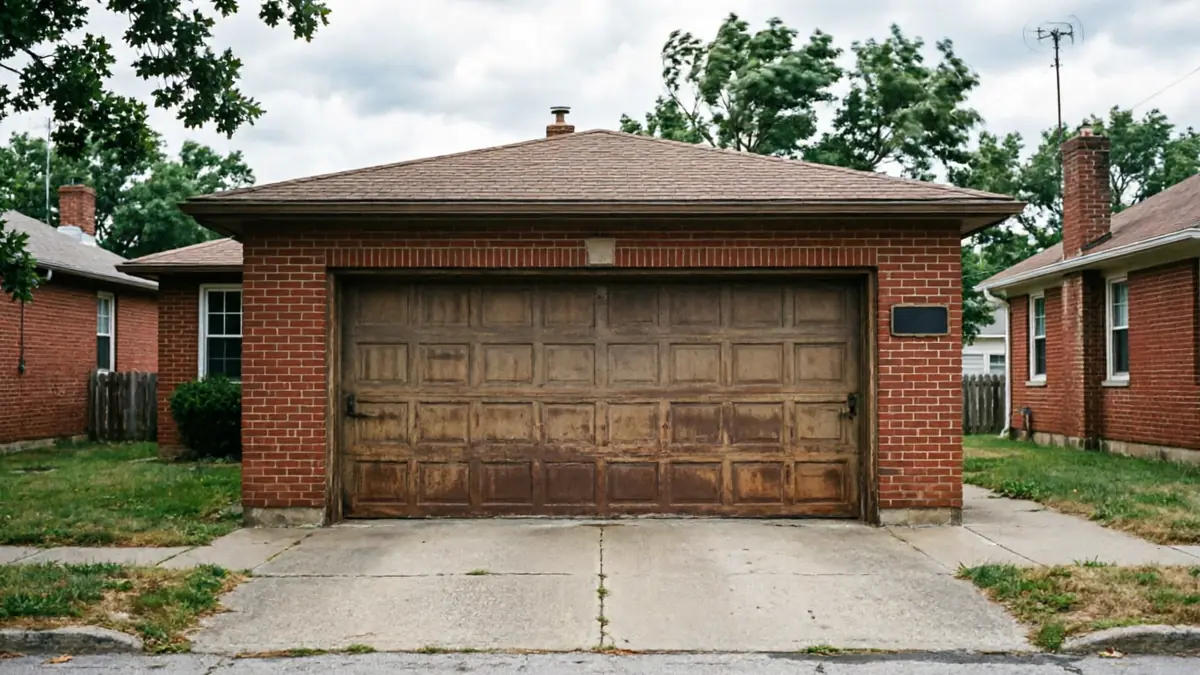
Most of the houses we work on here went up between 1950 and 2002, with the median landing around 1975 - which puts a big share of the doors we see at 45 to 50-plus years old, original or close to it. Across the 41 named areas this covers, the pattern repeats: 1960s and 70s construction, single garages more often than double, steel doors on torsion or extension springs that were standard for that build era.
What that means in practice is that the failure points are predictable. Springs rated for a specific door weight finally give out after thousands of cycles. Steel tracks that were fine for thirty years develop enough play to let rollers jump. Openers from a later retrofit don't always match the door's original travel limits, so you get a door that stops short or slams the last two inches.
We're not diagnosing a mystery when we come out - we're usually looking at one of a handful of things that happen to doors this age, in houses built this era, across this part of the metro.
What the Weather Here Does to It
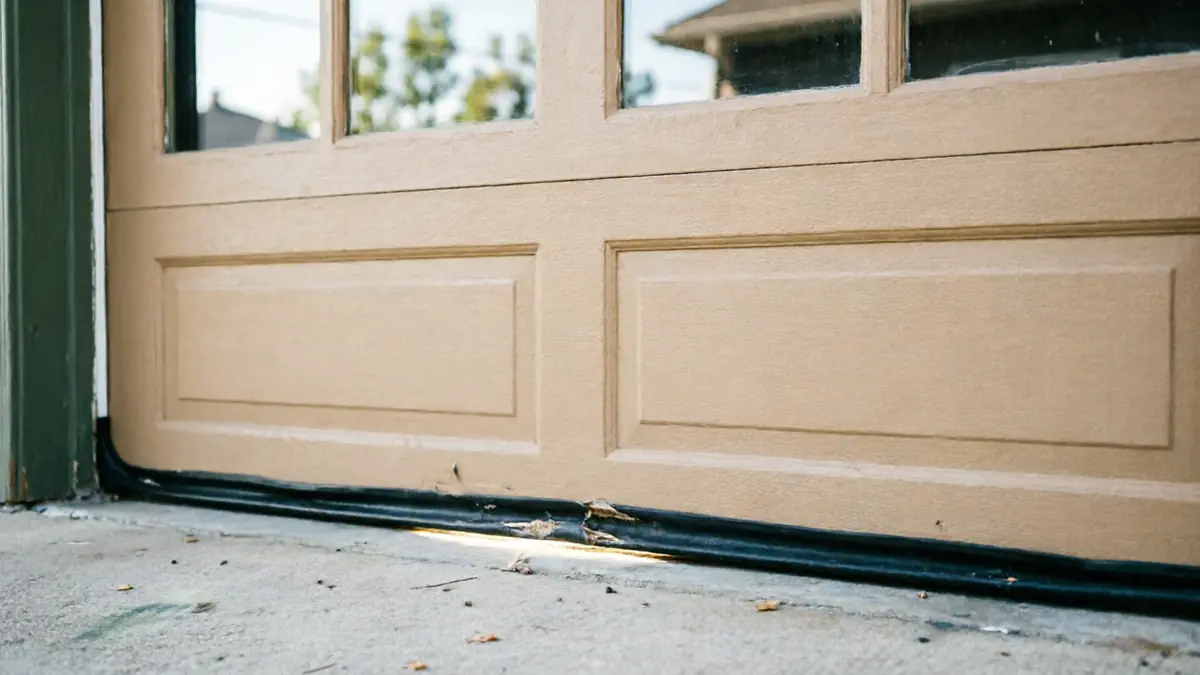
This area sits in a cold climate band, and that matters more for garage doors than people expect. Steel contracts in deep cold, which is part of why an older door that closed flush in August starts leaving a visible gap along the bottom by January. That gap isn't a defect - it's weather seals and draughts doing exactly what they do when the material around them shrinks.
The freeze-thaw cycle is harder on hardware than the cold alone. Moisture gets into a bottom bracket or a roller bearing during a thaw, then freezes solid overnight, and over a few winters that's enough to seize a part that used to turn freely. On 1960s and 70s doors especially, where the weatherstripping is original or close to it, that bottom seal has usually hardened past the point of sealing anything.
We can't stop a cold snap from finding every gap in an old door. What we can do is replace the seal and check the bottom bracket before winter does more damage to hardware that's already decades past its original install.
Talk to a local pro
Garage door trouble in Maplewood?
Same-day service with honest, upfront quotes.