Doing Nothing For Now
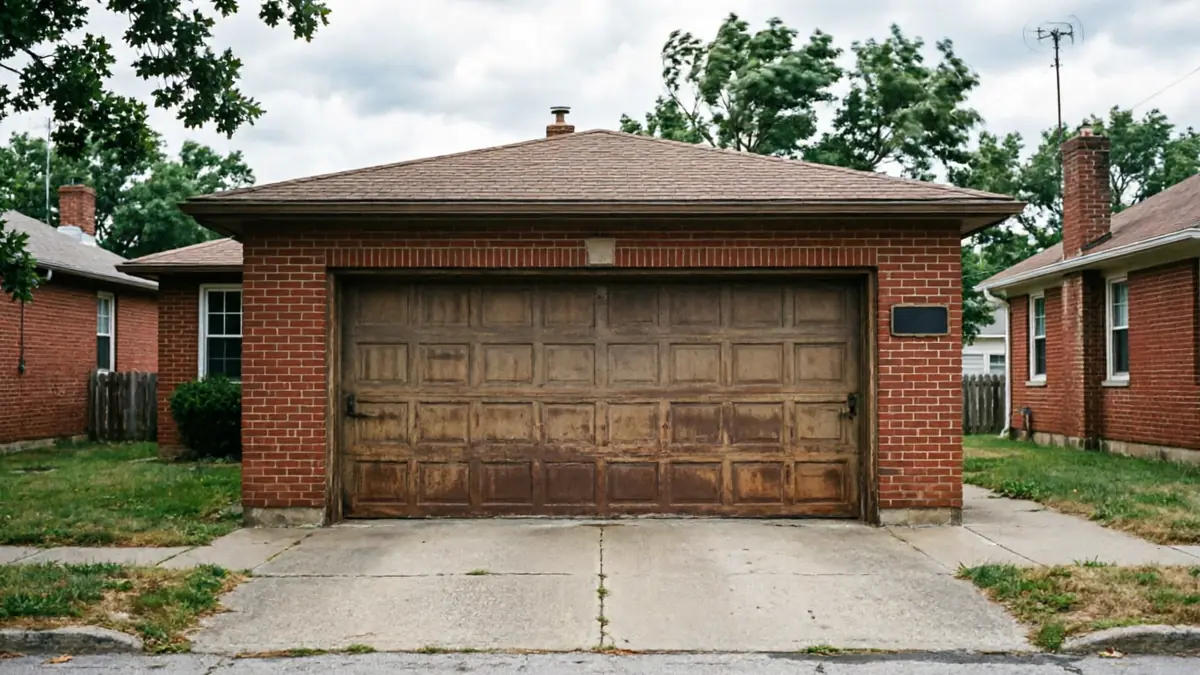
If your door still opens and closes and the panels aren't cracked, you don't have to do anything today. A lot of the housing stock here went up between 1950 and 2002, with most of it dating to the 1960s and 70s, and plenty of those original single-layer steel or wood doors are still hanging on fine. The real question isn't whether the door works right now - it's whether it was built to a code that assumed insulation wasn't your problem. If it was, waiting costs you in a heating bill, not in a breakdown. That's a fair trade to make for a season or two while you save up for the right fix instead of a rushed one.
What changes that calculus is a spring failure or a bent track - once you're paying labor anyway, swapping a 40-plus-year-old uninsulated slab for a modern panel usually makes more sense than repairing a door that was never built to hold heat in the first place.
The Cost of This Job
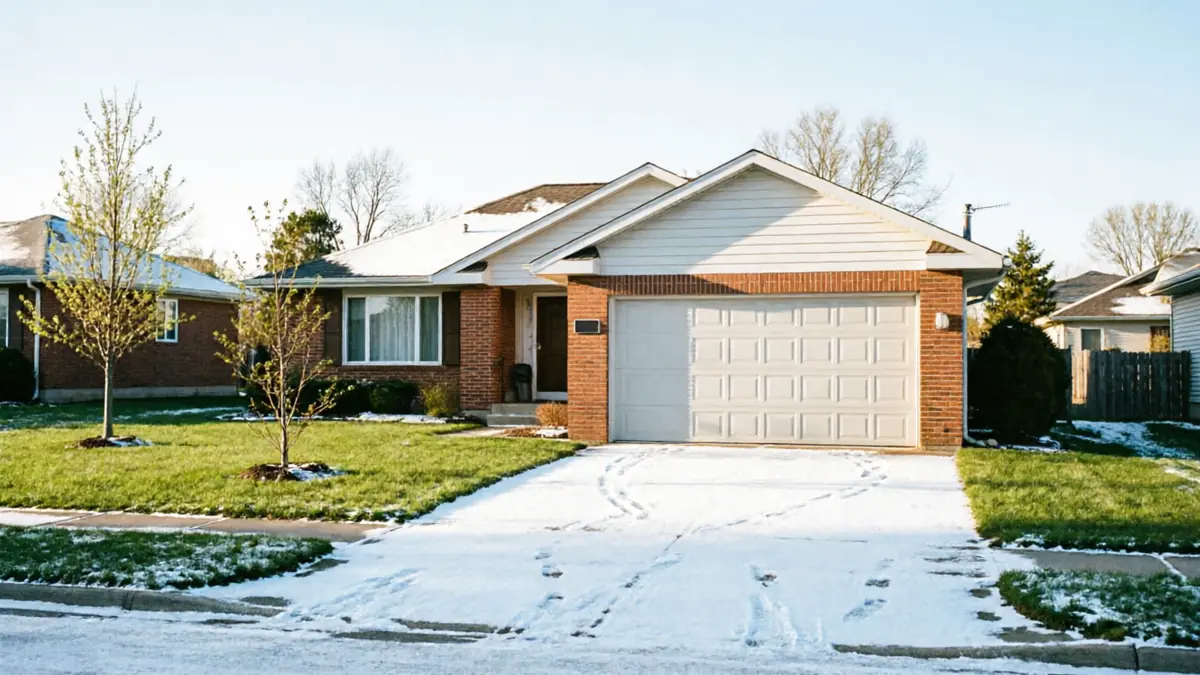
We can't quote you a number here because it depends on size, track type, and whether the opener needs work too - but we can tell you what drives the cost up or down in a house like yours. A single uninsulated door from the 1960s-70s era across this area is usually a standard steel or wood slab on older track hardware, which is cheaper to source than it sounds. The bigger cost swing is whether the jamb and header were framed for a door that size - a lot of homes built before insulation standards existed also weren't framed with today's wider double-door openings in mind, so a straight swap is cheaper than a resize.
Income in this area runs a median around $93,233, which is worth mentioning only because it shapes what we see homeowners actually choose: full replacement with an insulated door more often than a patch repair, since the payback on heat loss alone tends to make sense here.
What Is Going On
Across the 41 named areas that make up this part of the housing stock, most garage doors date to construction between 1950 and 2002, with the bulk clustered in the 1960s and 70s. Doors built in that window predate the insulation standards that later became routine in residential code. Practically, that means a single layer of steel or a slab of wood with no foam core, no weatherstripping worth the name, and gaps at the bottom seal that were never meant to stop air.
None of that was a defect when it was built - it just wasn't a requirement yet. The issue shows up now because the house around the door has usually been updated since: new windows, blown insulation in the attic, maybe a furnace swap. The garage door is often the one envelope component nobody touched, so it ends up being the biggest air leak in a house that otherwise performs fine.
What the Weather Here Does to It
This area sits in a cold, moderate climate band, which means the garage isn't just an attached room - it's a buffer zone that takes the brunt of winter temperature swings before they reach the house. An uninsulated door built before insulation rules doesn't just let cold in; it lets the steel panel itself get cold enough that moisture condenses on the inside face, which over a few winters can rust out the bottom panel or rot a wood slab from the inside.
The cold also makes old hardware brittle. Torsion springs and cables on a 50-plus-year-old door have already done thousands of cycles, and cold steel is less forgiving of fatigue than warm steel. That's part of why a spring on one of these older doors tends to let go in January rather than July - the metal's had less give left in it all along, and the cold is just when it finally shows.
Talk to a local pro
Garage door trouble in Maplewood?
Same-day service with honest, upfront quotes.