Doing Nothing For Now
Not every noise needs a truck. A door that's gotten louder over a few months, with no binding or jerking, is usually just dry hardware - rollers and hinges losing lubrication. On a house built in the 1960s or 70s, which describes most of the stock around here, that's often the explanation before anything else. A quick spray of garage-door lubricant on the rollers, hinges, and the top of the springs can quiet a door down for months.
Where waiting stops making sense: a single loud bang followed by the door feeling heavy or refusing to open smoothly. That's almost always a spring letting go, and running the opener against a broken spring is how you burn out the motor on top of the spring repair. If the noise comes with the door dropping unevenly on one side, stop using it and call - that's a cable or a bottom bracket, and it can come off the track.
We'll say plainly: if your door is quiet and smooth and you just don't like the squeak, you don't need a service call. Lubricant and ten minutes will do it. Save the call for noise that's changed quickly or that comes with the door moving differently than it used to.
The Cost of This Job
We're not going to put a number here we can't stand behind. What we can tell you is what drives the cost up or down once we're looking at the actual door. Age and originality matter most: a lot of the doors we see on houses built in the 1950s through the early 2000s - median build year around 1975 - still have their original torsion springs or an older extension-spring setup, and matching old hardware sometimes means swapping more of the assembly than a homeowner expects, because the exact part isn't made anymore.
With a median household income in this service area around $93,000, most of the calls we get are for a repair, not a full door replacement - fixing the spring, cable, or opener rather than starting over. That's usually the right call unless the door itself is rusted through or the panels are cracked, at which point repair money is better spent on a new door.
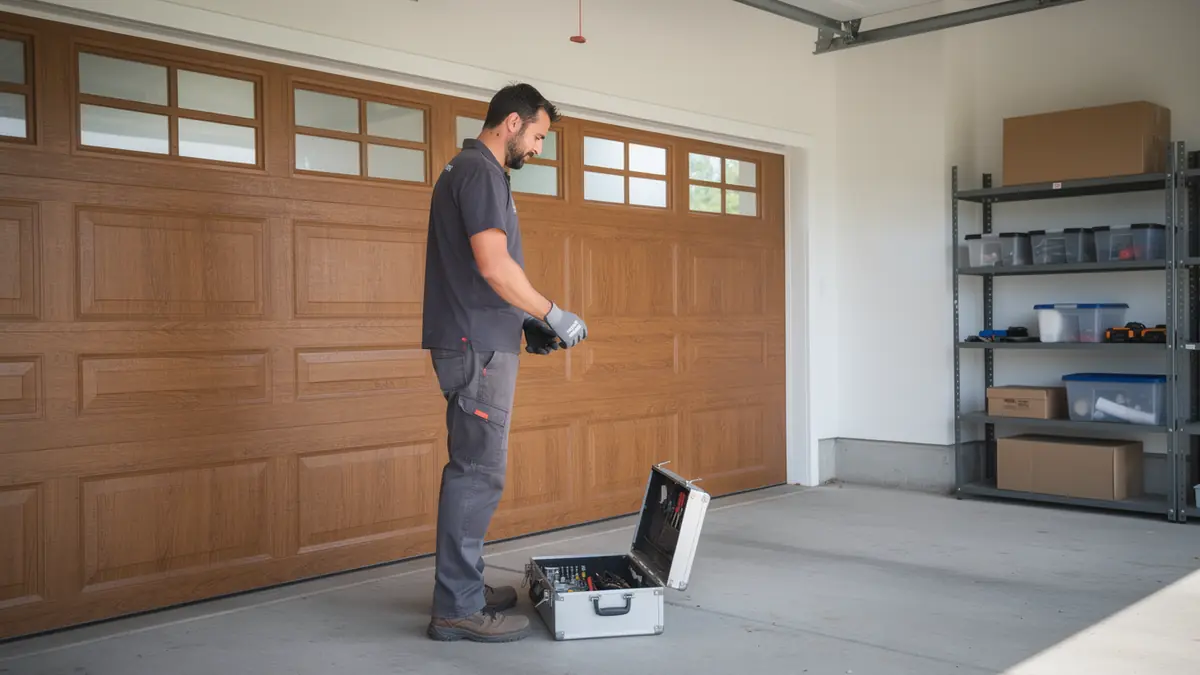
The honest limitation: we can't quote a price without seeing the door and hearing the noise in person. A spring job and an opener gear job sound similar over the phone and cost very differently. We'll give you a real number on site before anything gets touched.
What Is Going On
A rhythmic click or thump once per rotation usually means a flat spot on a roller or a bent track bracket - common once a roller's been riding the same groove for a couple decades. A deep metallic pop, usually once, almost always means a torsion spring under tension has cracked. A grinding sound from up near the opener, separate from the door itself, is often the drive gear inside the unit wearing down, not the door at all.
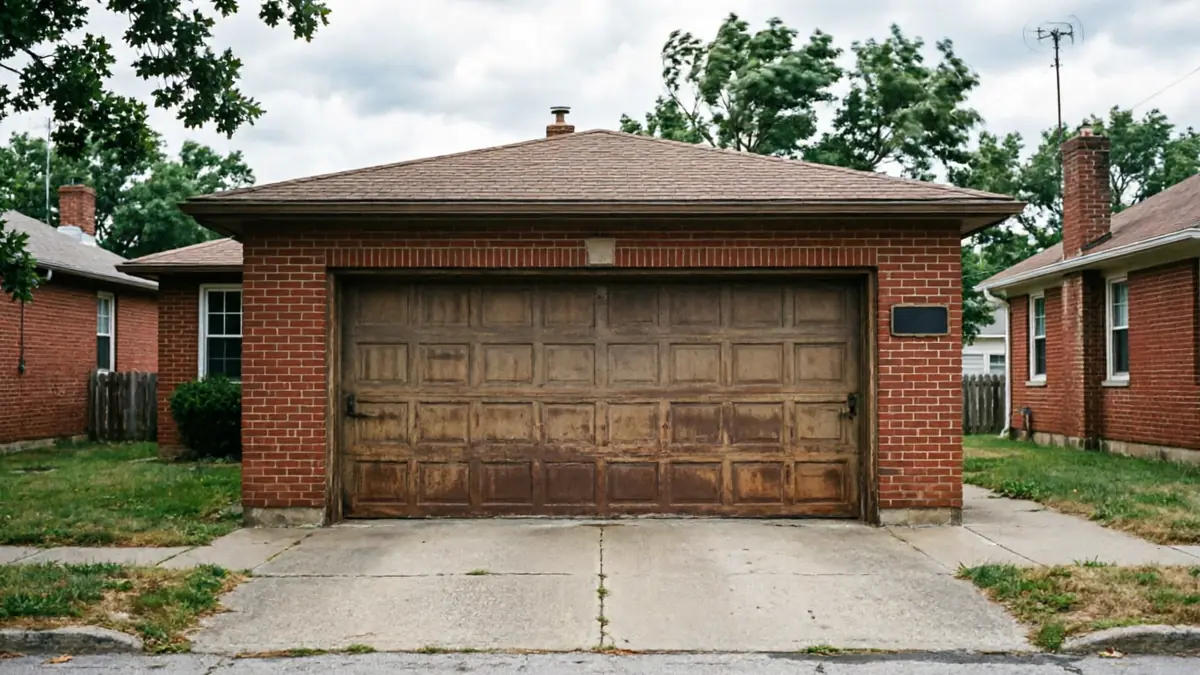
Across the 41 named neighborhoods in this service area, most houses share a build era - 1960s and 70s construction - so a lot of these doors are running hardware that's original or close to it. That matters for diagnosis: a door installed in 1972 with its original springs isn't rare here, it's typical, and springs have a cycle life whether or not they ever got touched. A rattling, loose sound along the whole track usually means the track bolts have worked loose from decades of vibration rather than a broken part.
We can't tell you which of these it is without hearing the door run. But the pattern - one loud sound versus an ongoing one, and where along the door it comes from - narrows it down fast over the phone.
What the Weather Here Does to It
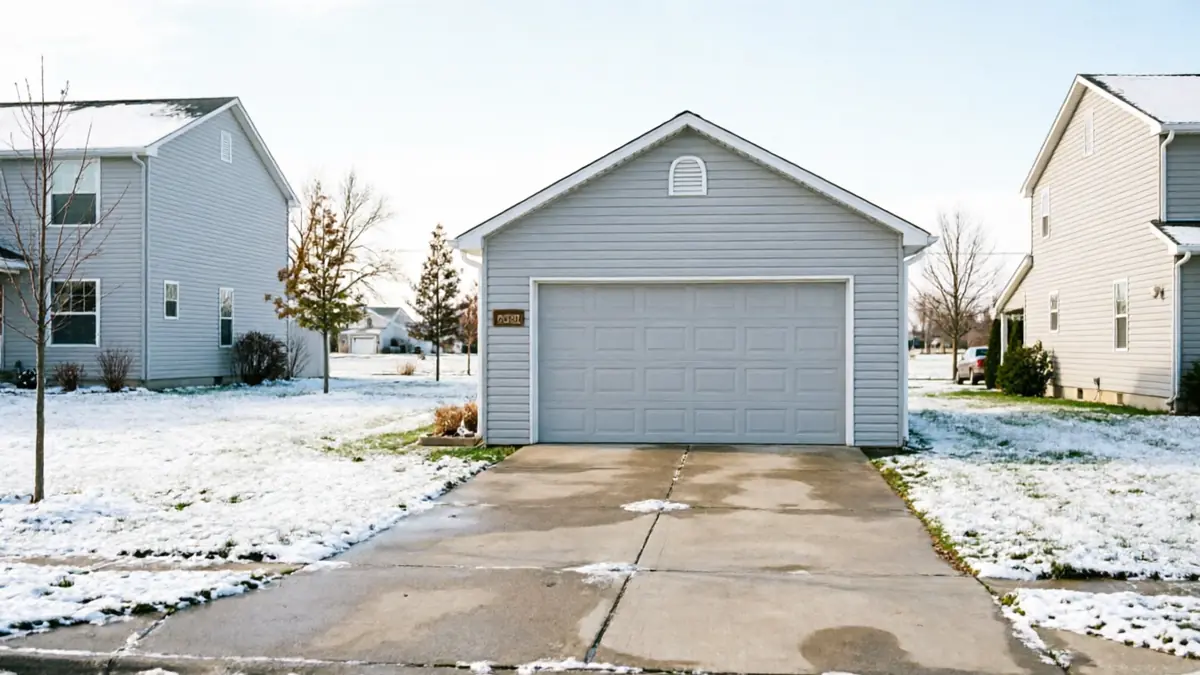
This is a cold-climate area, and cold does specific things to a garage door that a mild-climate town never deals with. Steel contracts in low temperatures, and hardware that was already a little loose in warmer months will rattle louder once it's cold - the same slack that was quiet in July complains in January. Grease also stiffens in the cold, so a door that runs smooth and quiet in summer can start to groan through the opener in winter even with nothing mechanically wrong.
The bigger issue is springs. A spring under tension that's near the end of its life is more likely to break on a cold morning than a warm afternoon, because cold steel is less forgiving of stress. If your door's noise has gotten noticeably worse specifically since temperatures dropped, that's not a coincidence - it's the cold exposing wear that was already there.
We use lubricant rated for cold temperatures on service calls here rather than a general-purpose grease, since standard grease can gum up and attract grit once it's cold enough. If you're hearing new noise this time of year, mention that when you call - it changes what we expect to find.
Talk to a local pro
Garage door trouble in Maplewood?
Same-day service with honest, upfront quotes.