Doing Nothing For Now
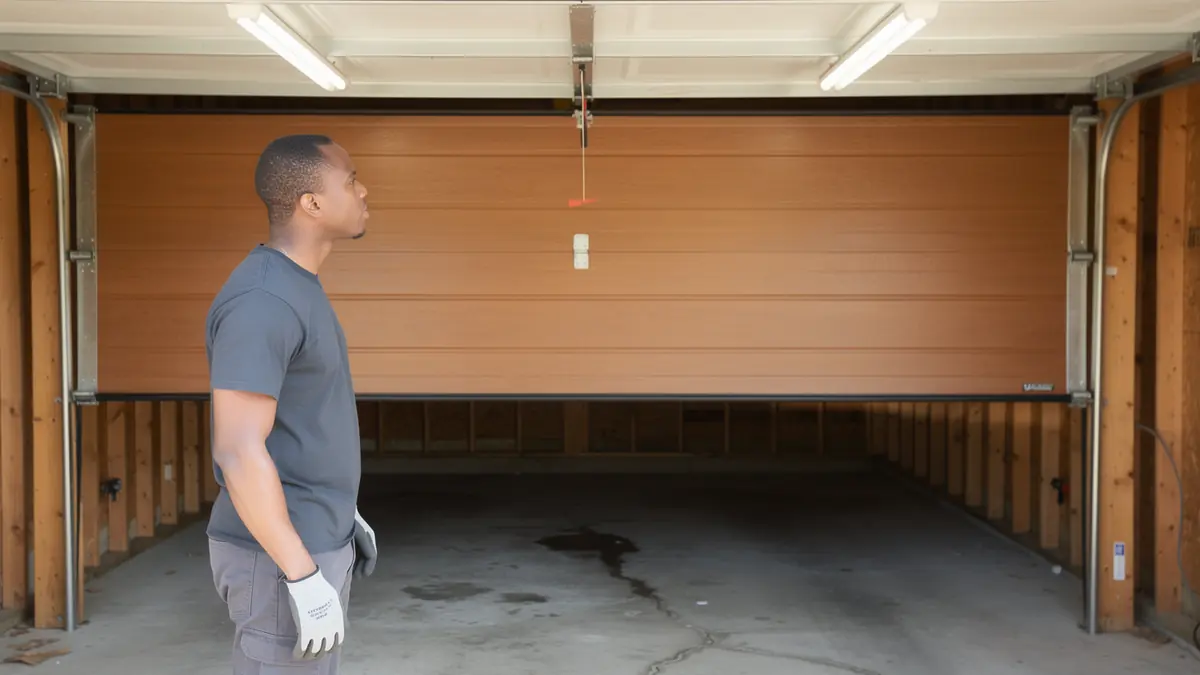
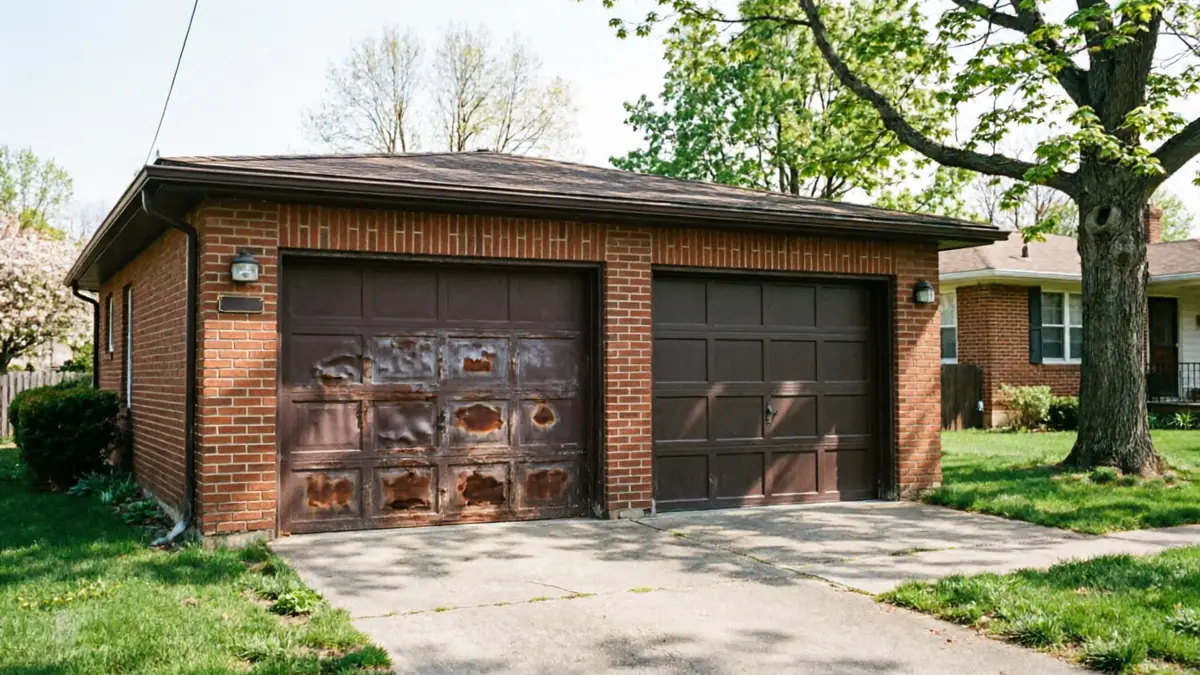
If your door still goes up and down without grinding, shuddering, or needing a shove, there's no reason to replace it just because it's old. A lot of Maplewood houses were built between 1950 and 2002, with most of the stock going up in the 1960s and 70s, and plenty of those original doors are still doing their job decades later. Steel sectional doors from that era were built heavier than a lot of what gets installed today, and if the panels aren't rusted through or delaminating, a working door is a working door. The mistake we see is people replacing a door because of its age alone, not because of anything it's actually doing wrong. Check the obvious things first: does it reverse when it hits something, does the opener hold tension, are the cables frayed. If none of that is happening, put the money toward maintenance instead - lubricate the rollers and hinges, check the spring tension, and leave it alone. We'd rather tell you to wait a year than sell you a door you don't need yet.
The Cost of This Job
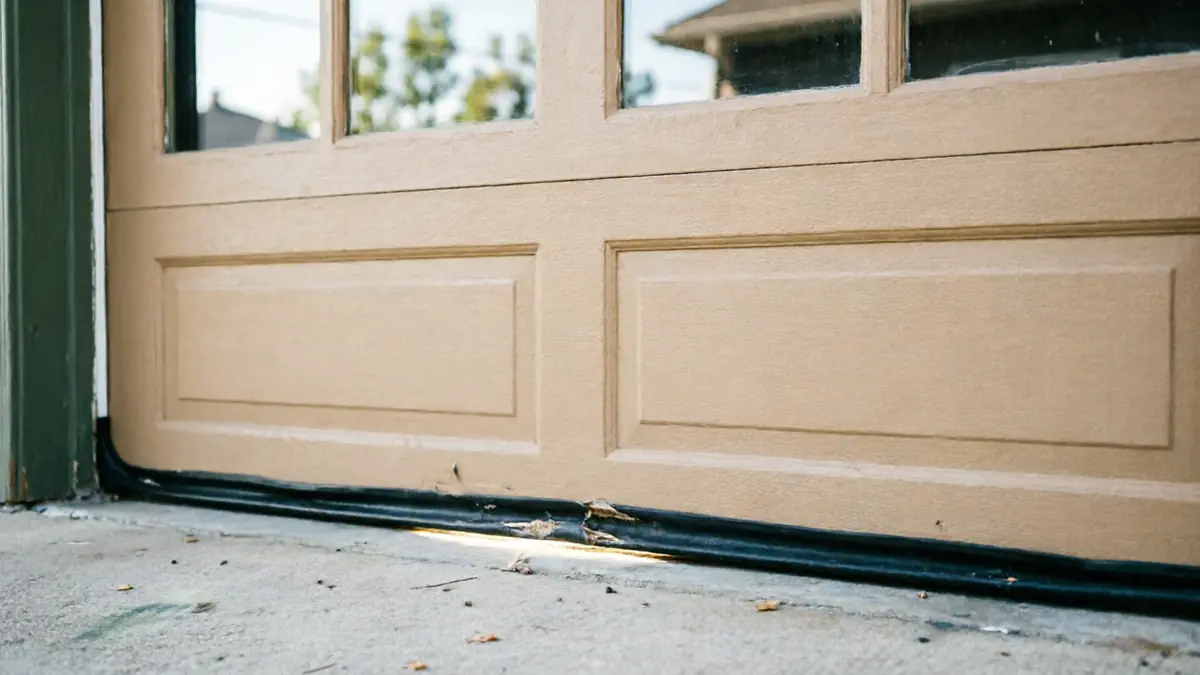
We can't quote a number here without seeing the door, so we won't guess at one. What we can tell you is what drives the cost up or down. A torsion spring swap on a door from the 1960s-70s stock common across this area is usually straightforward if the drums and shaft are original and not pitted from rust. Where it gets expensive is when the track is bent, the bottom panel has rotted from years of snowmelt sitting against it, or the opener and door were never a matched pair to begin with and something has to be adapted. Doors built to the standards common when this housing went up often used section sizes and hardware spacing that don't match current stock parts, so a repair can mean sourcing an odd-size panel or rebuilding a bracket rather than swapping in something off the shelf. That's the honest limitation: if a panel is custom-sized for an older frame, we may need to special-order it, and that adds time, not just dollars.
What Is Going On
Most garage door failures in this area trace back to one of two things: a spring that's done its cycle count, or hardware that was fine for forty years and finally gave out. With median housing age around 1975 across Maplewood, a lot of torsion springs out there have been doing lifting work since the Carter administration. Springs don't fail from being old so much as from hitting their rated number of open-close cycles, and a well-used family garage door can rack those up fast. The other common issue on older stock is the track alignment - decades of settling on an older slab can throw a track out of true by enough that rollers start binding, which sounds like a motor problem but isn't. We check the spring, the cables, the track, and the opener's force settings before we tell anyone what's actually broken. A door that
What the Weather Here Does to It
Maplewood sits in a cold, moderate climate band, and that matters more for an older door than people expect. Steel contracts in the cold, and on a door that's forty or fifty years old, the panel seams and weatherstripping have already lost some of their give - so a door that closes flush in July can bind or leave a gap in January. Torsion springs also lose a little tension as temperatures drop, which is why a door that felt normal all summer suddenly feels heavy to lift once it gets cold. None of this means the door is failing; it means cold-weather metal behaves differently than warm-weather metal, and an older spring has less margin to absorb that swing. If you've got a door from the original 1960s-70s build and it's started groaning or sticking only in winter, that's often the spring telling you it's near the end of its cycle life, not a sign the whole unit needs replacing.
Talk to a local pro
Garage door trouble in Maplewood?
Same-day service with honest, upfront quotes.