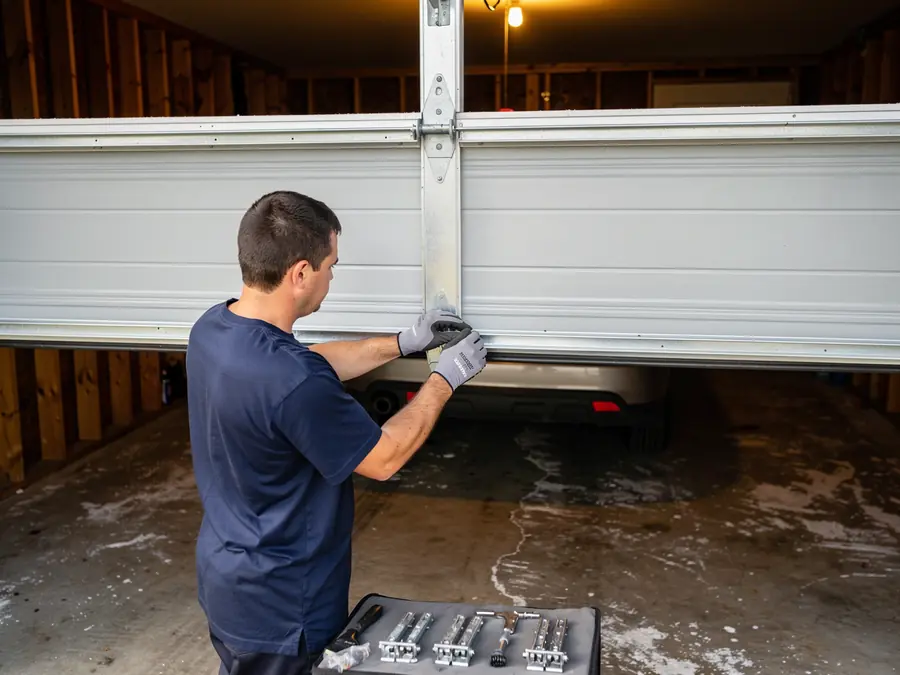
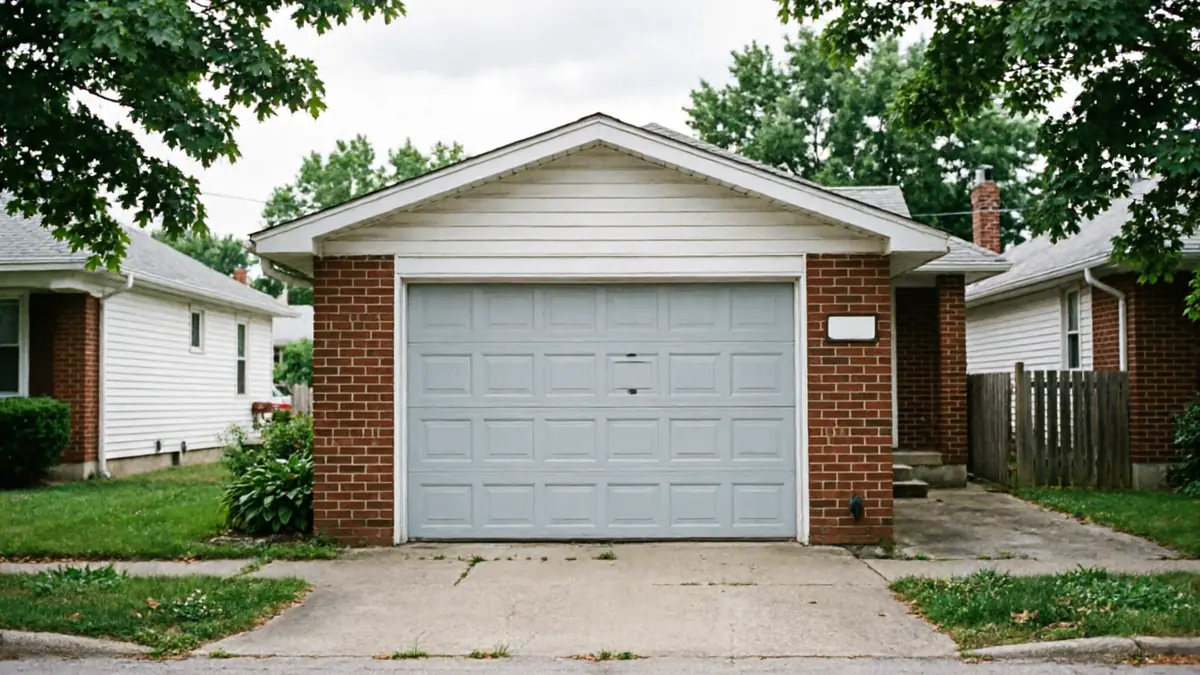
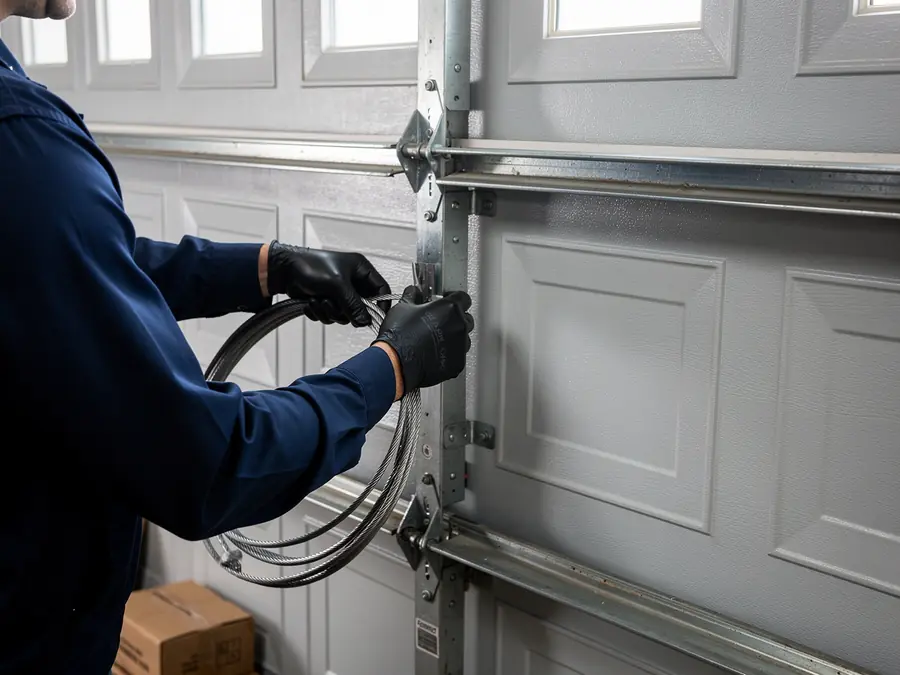
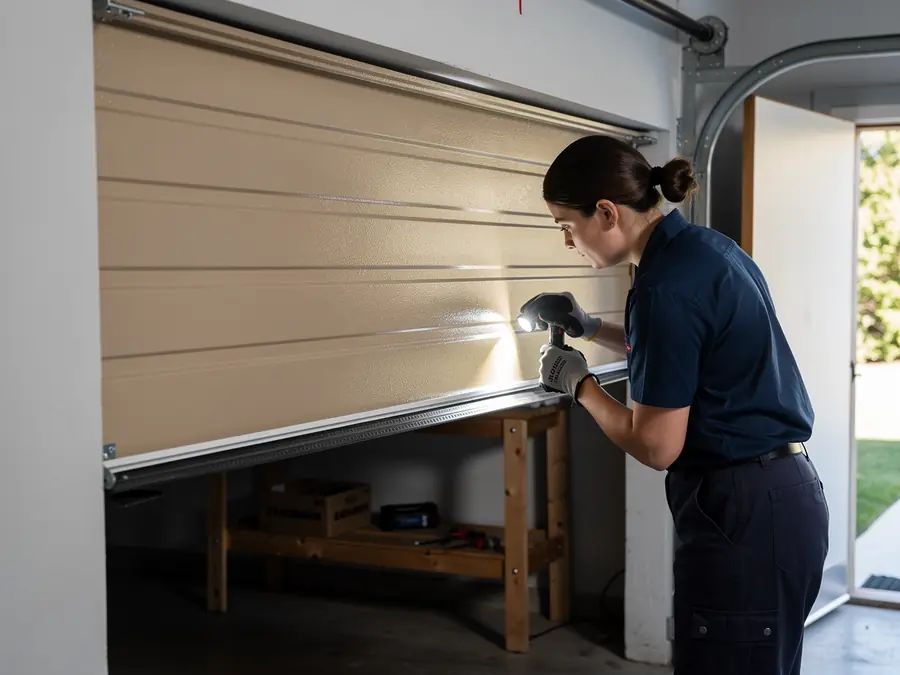
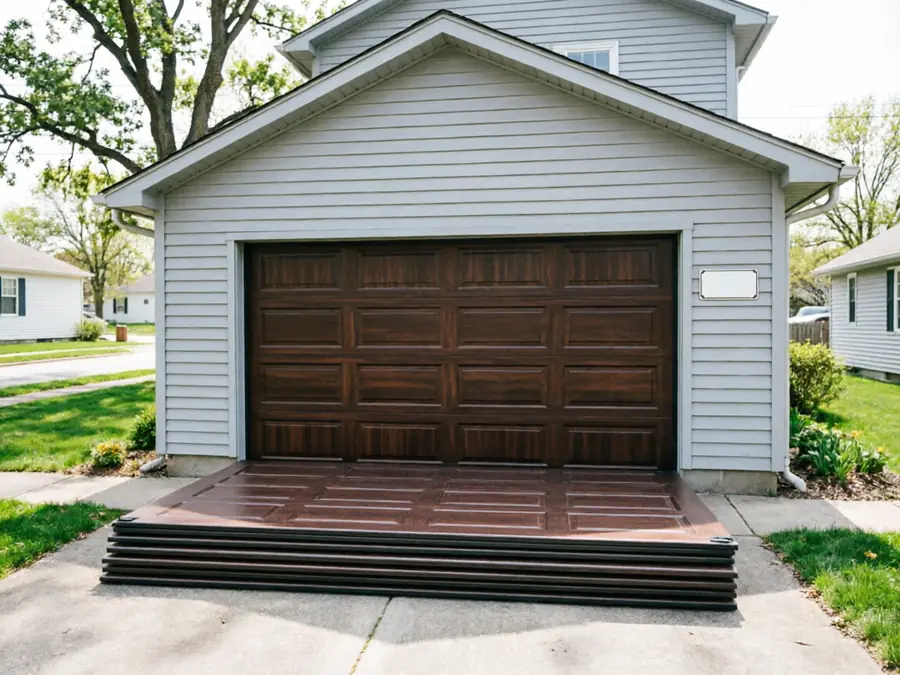
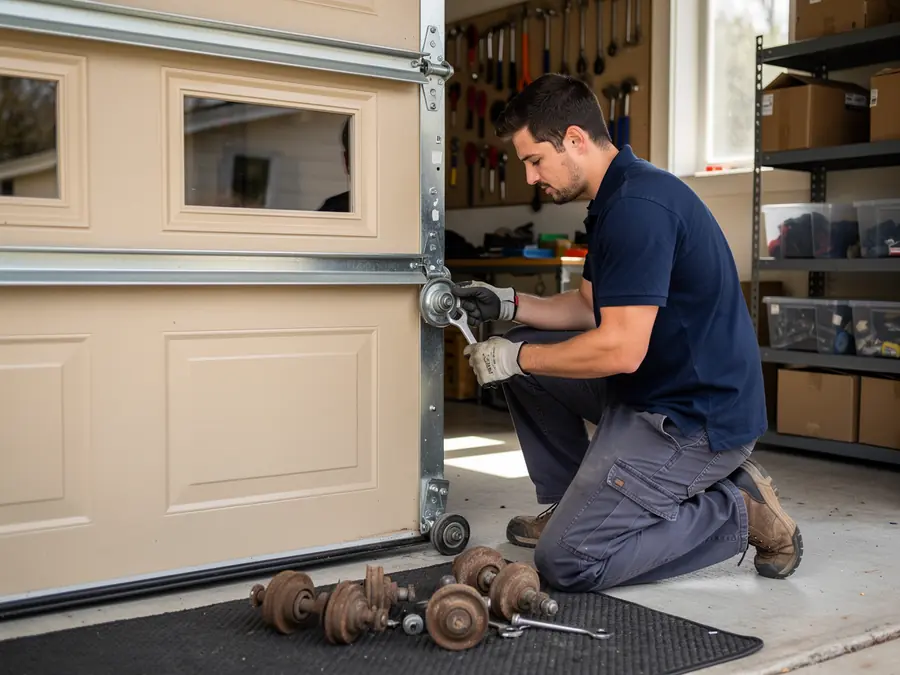
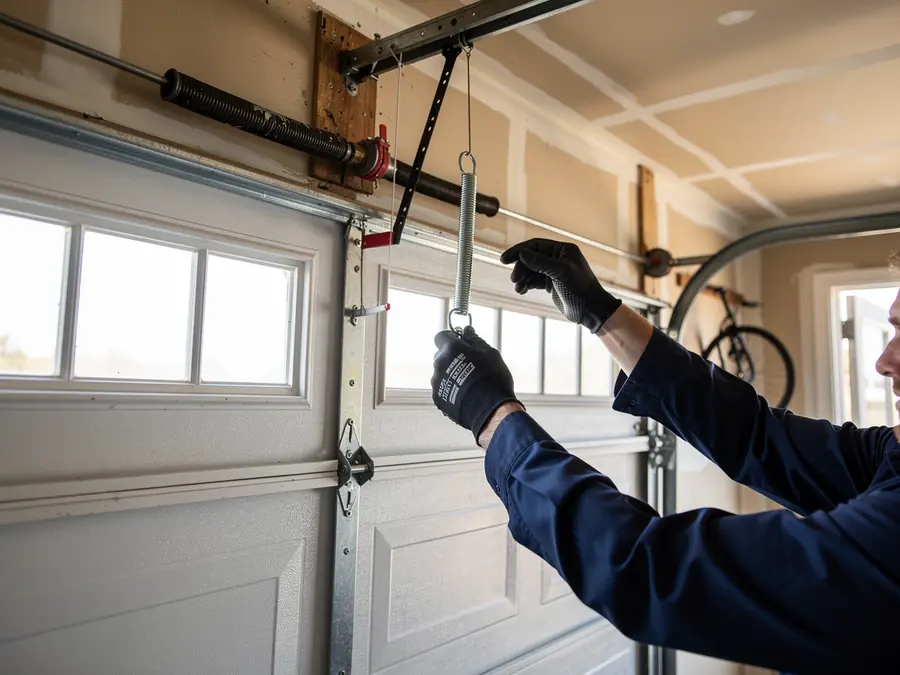
The service area sits in a cold, moderate climate band, and that shows up in panel failure the same way it does everywhere in the Twin Cities - but a 1993-era steel door fails differently than a 1975-era one. Older doors often ran thinner steel or wood composite, which rots or dents outright. The 1990s steel sections are heavier gauge, but they're foam-backed, and once moisture gets behind a cracked seam or a bent bottom rail, the foam holds water against the steel from the inside. You get rust bubbling up through the paint from the back side, which looks cosmetic until the section finally buckles.
Freeze-thaw cycling is the other half of it. A hairline seam crack that's invisible in July opens up by February because the trapped moisture freezes and expands. By the time an owner notices, the damage has usually spread past the one panel they called about.
We can't tell you which exact section is compromised over the phone - that's a hands-on look, not a guess based on the town's build year alone.