
Cold mornings bind rollers
Oakdale sits in a cold climate zone with real winter cycling, and steel rollers with dry or rusted stems bind up hardest on the coldest mornings - right when you're trying to get out the door for work.
Oakdale, Maplewood
Oakdale homes built around 1987 came with steel doors on nylon rollers that age out together. We travel 4 miles from Maplewood to replace worn rollers before they take the track with them.
Local causes
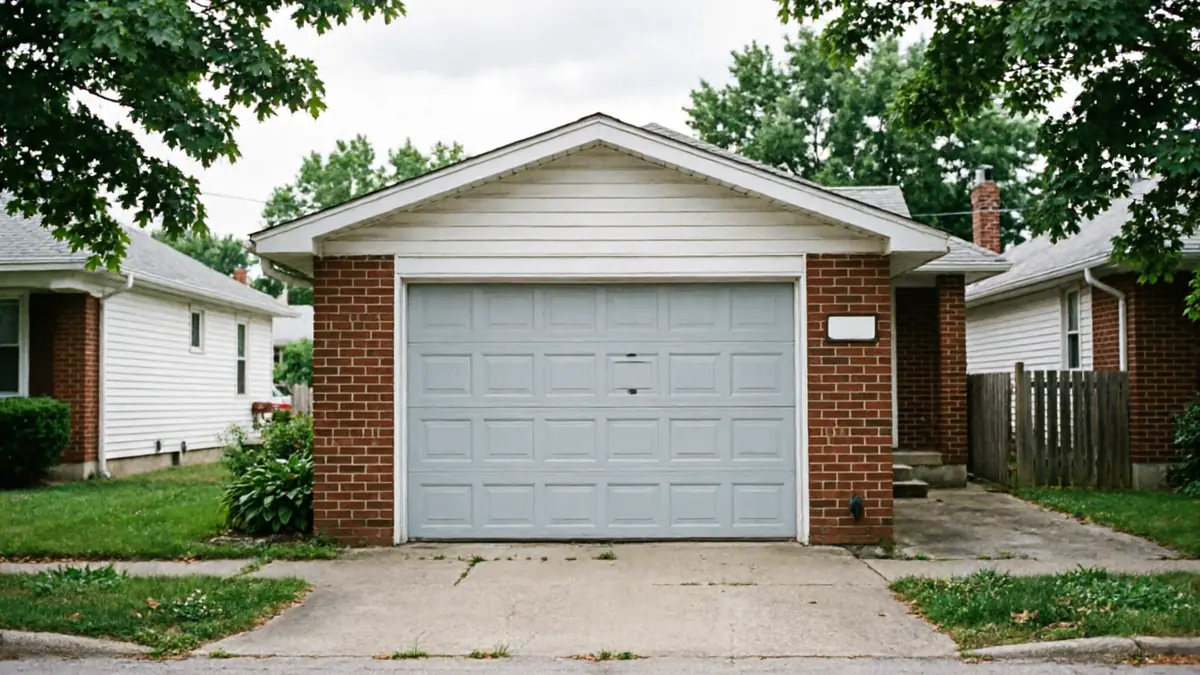
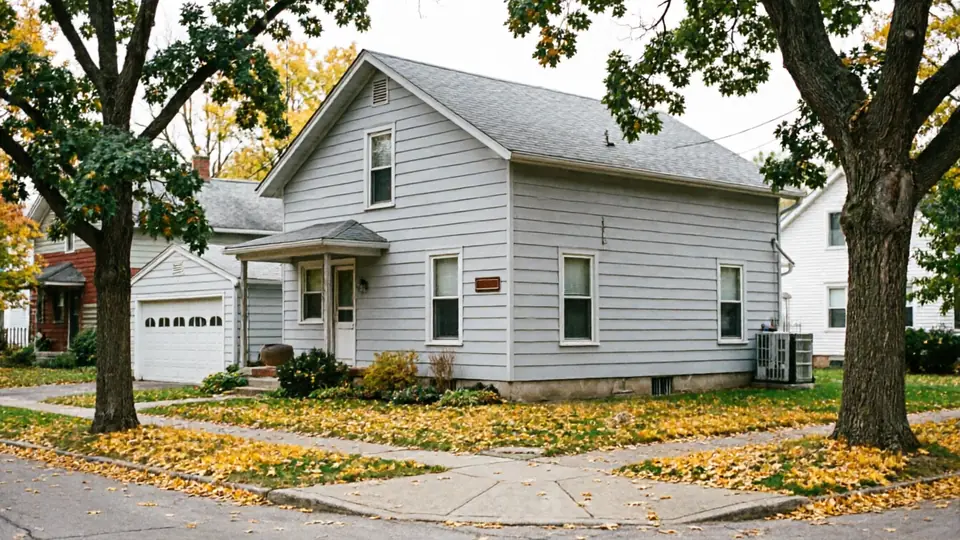
Most garage doors standing in Oakdale went up around 1987, which puts them past the plywood-and-wood-track era and into the first wave of mass-produced steel sectional doors. Those doors shipped on steel track with stamped steel rollers, or later in that stretch, cheap nylon rollers with no bearing core. Either way, the roller was built to last maybe ten years under daily cycling, not forty. A steel roller with no sealed bearing wears its own stem down until it rattles loose in the track. A bearingless nylon roller just cracks and sheds chunks. You're not dealing with a one-off defect here - you're dealing with a whole subdivision of doors that aged in at the same time and are failing in the same ten-year window now. If your neighbor's door started grinding last spring, yours is on the same clock.The track itself usually isn't the problem. The rollers inside it are what gave out.
Watch-outs
The climate here is the part that turns a simple roller swap into a bigger job if you wait.
Oakdale sits in a cold climate zone with real winter cycling, and steel rollers with dry or rusted stems bind up hardest on the coldest mornings - right when you're trying to get out the door for work.
A roller that's already grinding against a frozen track puts side-load on the hinges and the track brackets, and that's how a $20 part turns into bent track and a bowed panel. We see it most on the lower rollers, the ones that take the most weight and the most road grit kicked up off the driveway.
The other place this goes sideways: people replace the rollers but not the worn hinge the roller sits in, and the new roller wears out again in two years because it was never seated straight. A roller swap done right checks the hinge bore, not just the roller.
Warning signs
A door that shudders instead of rolling smooth, especially in the last foot before it seats. A grinding or clicking sound that changes pitch as the door moves - that's a flat spot on a worn roller hitting the track seam over and over. Chips of nylon or small rust flakes on the garage floor near the track, which is literal roller material coming off the stem. Sometimes the door will hang up a few inches and need a shove to keep going. None of these mean the opener is failing or the spring is going - they're roller symptoms, and they show up well before anything stops working completely. The risk in ignoring them is that a jammed roller eventually jumps the track, and at that point you've got a door that won't move at all until someone comes out and reseats it.
Downtime
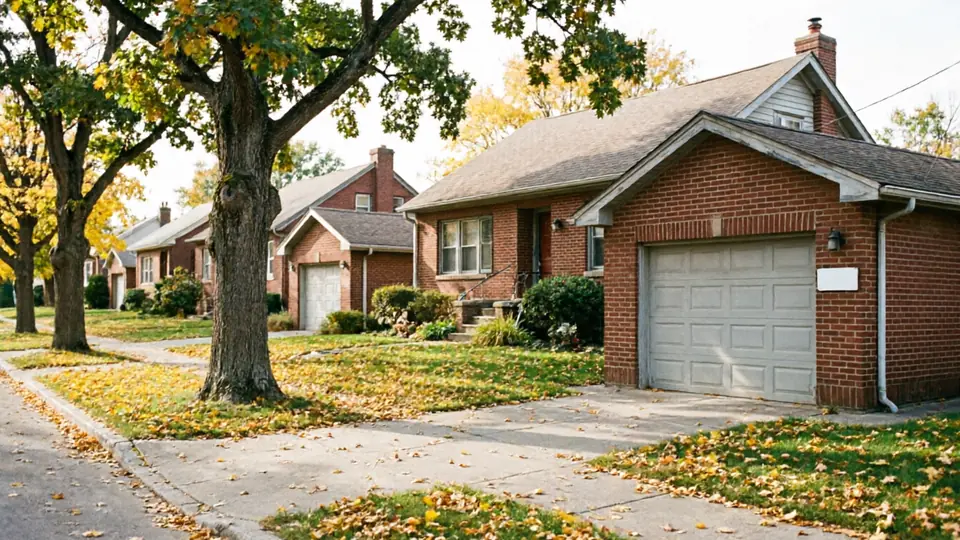
We're a 4-mile run from Maplewood out to Oakdale, which keeps this a same-trip job rather than something that gets scheduled around. Roller replacement itself, once we're on-site, is a parts-and-labor job measured in an hour or two depending on how many of the ten rollers need swapping and what shape the track is in. We don't carry every roller grade on the truck for every door, so if yours needs a heavier-duty sealed-bearing roller than what's standard, that part may need to be ordered - we'll tell you straight if that's the case rather than install something undersized to get the job closed out today.
The repair
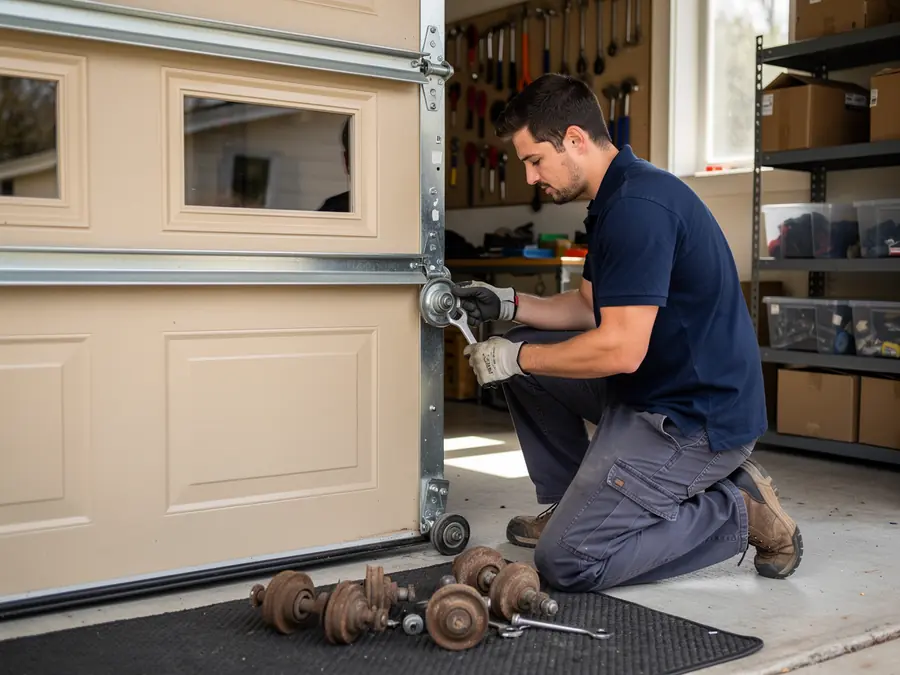
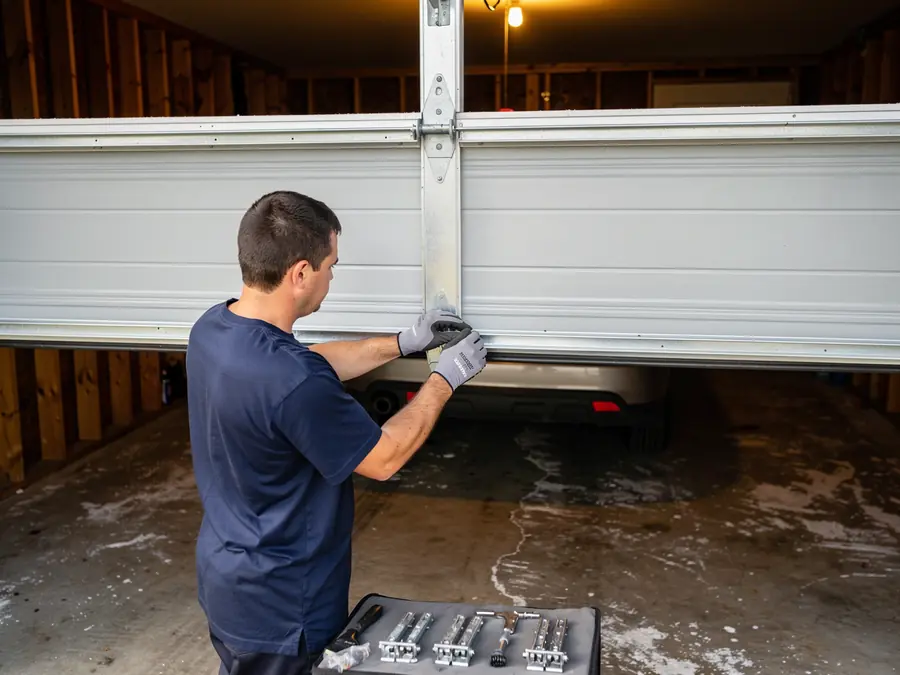
We pull the door down section by section, working the hinges loose enough to slide the old rollers out without letting a panel drop on the track.
Each roller gets checked against its hinge bore - if the hinge itself is oval-worn from forty years of a dying roller grinding inside it, that hinge gets replaced too, not just the roller.
For a 1987-era Oakdale door we're usually looking at 2-inch stem rollers, nylon with sealed bearings as the standard upgrade from whatever shipped originally. Track gets wiped down and checked for the kind of scoring that means it needs straightening rather than just a new roller running through it.
We don't repaint or resurface the door as part of this job - if the panels themselves are dented or the finish is shot, that's a separate conversation, and we'll say so rather than pad the invoice.
Questions
If the door grinds or shudders while moving but the opener motor sounds normal and the door eventually gets where it's going, that's almost always rollers, not the opener. Opener problems usually show up as the door not moving at all, or reversing immediately. A rough, clicking ride with the door still closing fully points straight at worn rollers.
Not necessarily. We check each one individually. In practice, on a door built in the 1987 range, the bottom two rollers usually wear fastest since they carry the most weight and catch the most grit, so sometimes it's a partial swap rather than all ten.
Sometimes, if a worn roller flat-spot is what's catching in the track near the bottom. But a door that won't fully close can also be a sensor or spring tension issue, and we won't tell you it's rollers if the symptoms point elsewhere.
Yes. In a cold climate like this one, stiff or rusted roller stems bind harder against frozen track first thing in the morning, which adds side-load to the hinges and track brackets over time. A roller already close to failing tends to go in the first real cold snap of the season.
Explore more
Ready when you are
Maplewood Garage Door Pros repairs and installs garage doors, springs and openers in Maplewood, MN and the surrounding area.