
Center bearing and drums
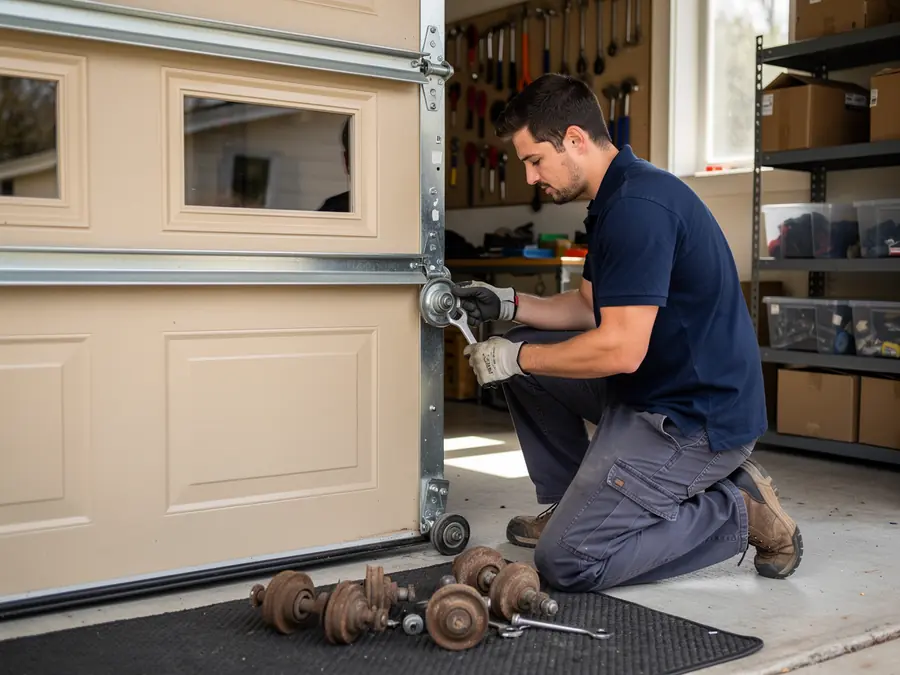
After three and a half decades, the center bearing can be dry or pitted, and if nobody's touched it, the cable drums at either end may be worn enough that a fresh spring still leaves the door running unevenly.
Oakdale, Maplewood
Oakdale's housing mostly dates to 1987, a decade after Maplewood's own stock. That gap changes which springs fail and how. We drive the four miles to fix it.
Local causes
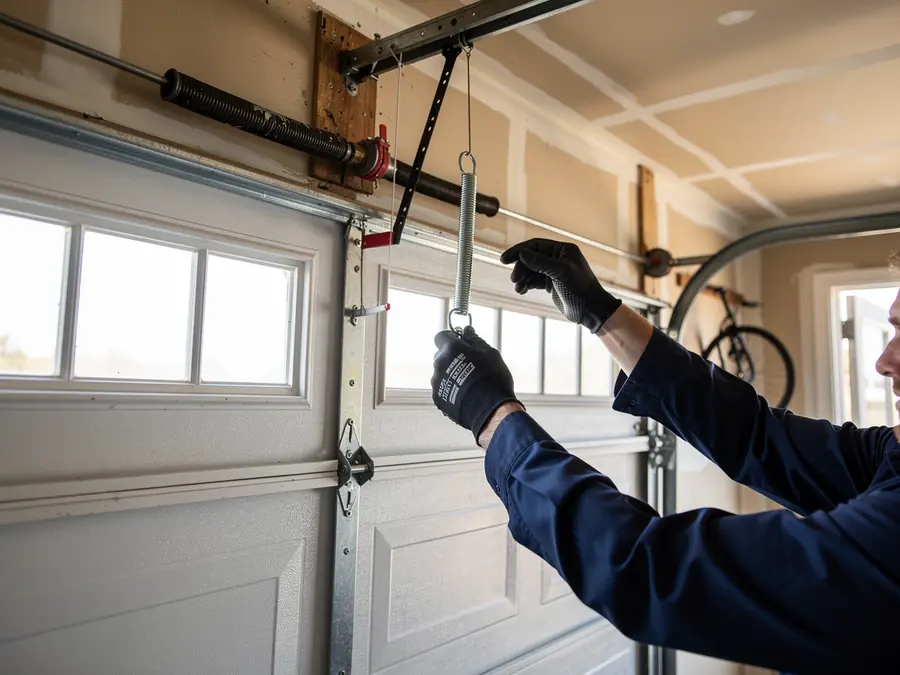
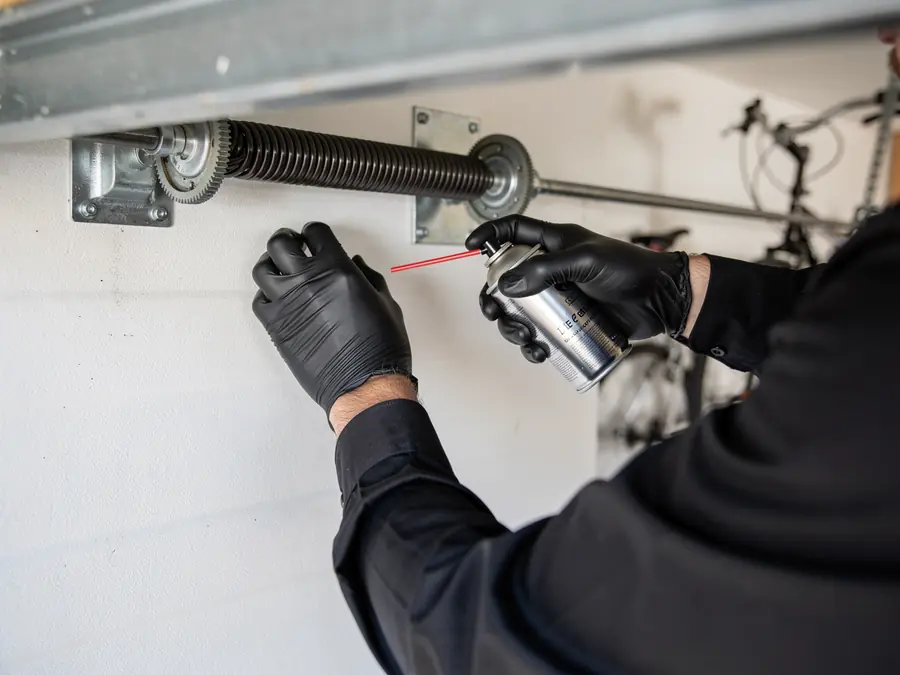
Oakdale's houses mostly went up around 1987, which puts this suburb a decade newer than the median across the wider service area, where the build year lands closer to 1975. That gap matters more than it sounds. By the late 1980s, torsion springs mounted on a shaft over the header were already standard on new construction - builders had mostly moved off the older side-mounted extension spring setups that still show up in the pre-1970s pockets closer to the lake towns. So a spring failure in Oakdale is almost always a torsion spring, wound tight over the door and anchored to a center bracket, not the open coil-and-pulley rigs that fail differently and need different hardware entirely. Compare that to the service area's overall median build year of 1975, and Oakdale sits firmly in the newer third of the territory. That doesn't make the springs immortal - torsion springs have a rated cycle life regardless of install year, and a door opened twice a day for 35+ years has used most of it. It just means the fix, and the parts we bring, are predictable once we know the house is from that era.
Watch-outs
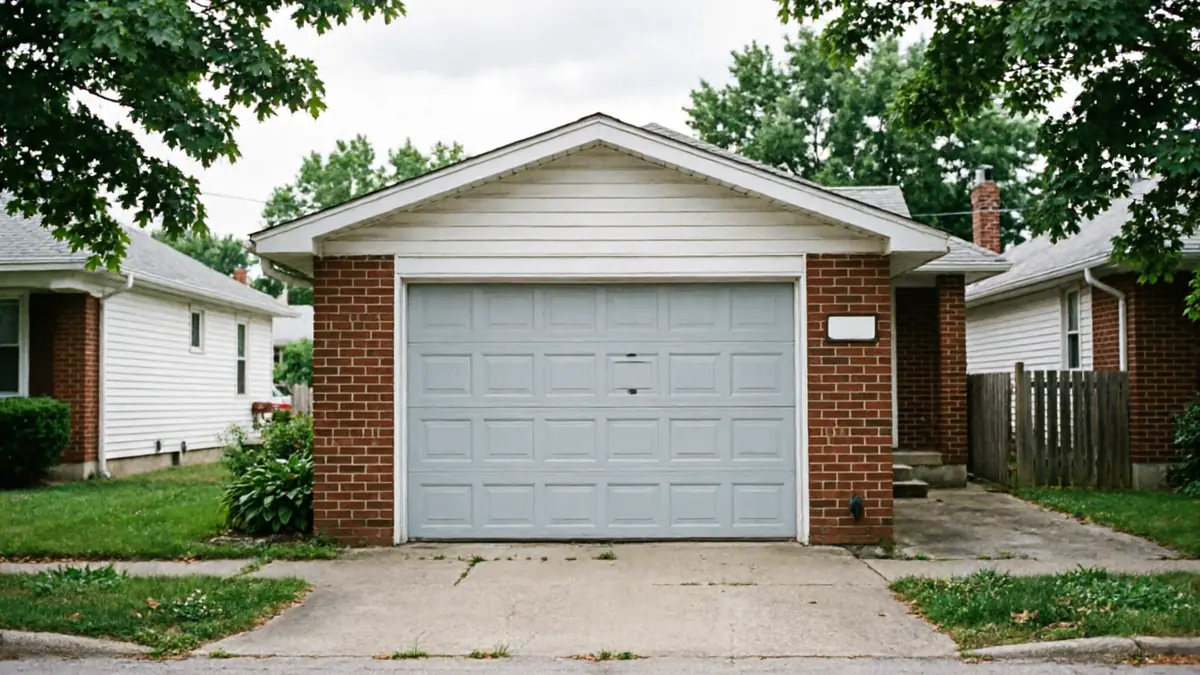
The complication in a torsion-spring house like most of Oakdale isn't usually the spring itself - it's the shaft and bearing plates it's wound around.
After three and a half decades, the center bearing can be dry or pitted, and if nobody's touched it, the cable drums at either end may be worn enough that a fresh spring still leaves the door running unevenly.
We've also seen homeowners here replace one spring on a double door after it broke and leave the matching spring on the other side at its original age - that's a mismatch waiting to fail again within a year or two, because the unbroken spring is just as old and just as tired.
With 11,513 households in Oakdale built on roughly the same torsion-spring hardware from the same decade, a lot of those springs are wearing out in the same few-year window, which is why we see clusters of these calls rather than one-offs.
Warning signs
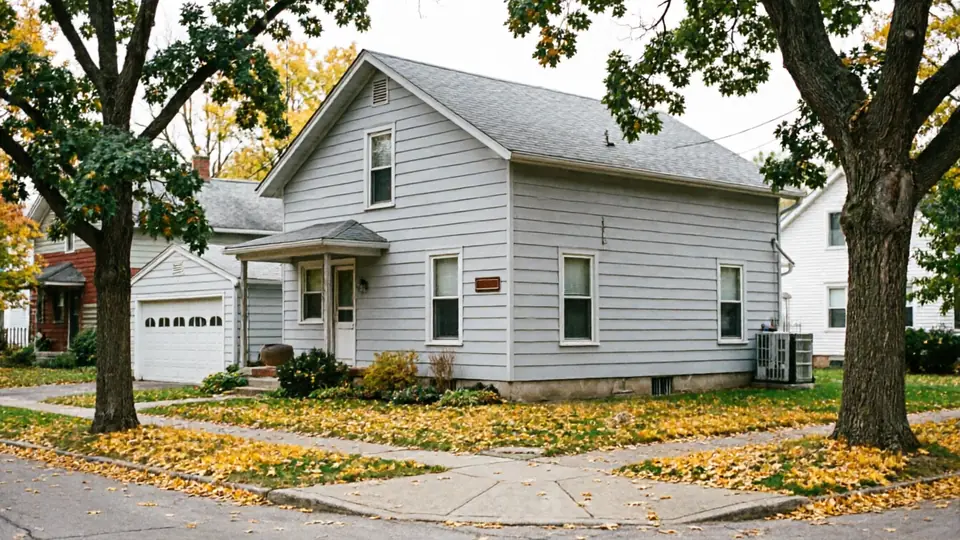
A torsion spring that's gone usually announces itself loudly - a bang from the garage, then a door that won't lift, or an opener that strains and reverses. Sometimes it's quieter: the door feels heavier than it used to, or it drops the last foot instead of lowering evenly. On a double door with two springs, you'll often see the door tilt to one side as it opens, because only one spring is still doing the work. If you pull the emergency release and try to lift the door by hand and it feels like dead weight instead of balancing itself partway up, that's a broken or badly weakened torsion spring, not an opener problem. We don't recommend trying to inspect the spring yourself while it's wound - that's one job where the honest advice is to leave it alone and call.
Downtime
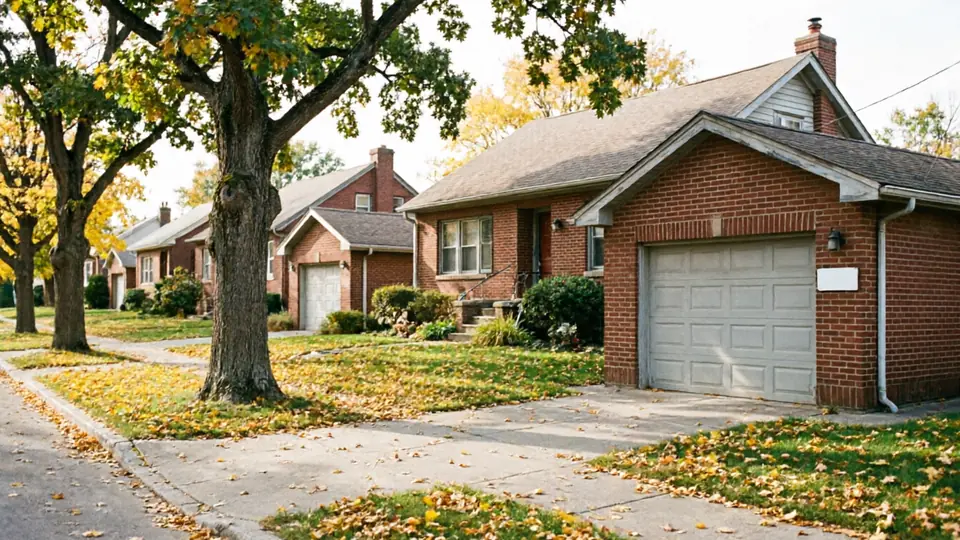
We run out of Maplewood, about four miles from Oakdale, so there's no separate branch or depot here - just the truck making that short run. How long you're without a working door depends mostly on whether we're carrying the right spring size on the truck already or need to special-order one, which does happen with less common wind lengths. For the standard torsion springs that match Oakdale's 1980s-era doors, we typically carry stock sizes. Anything unusual - a heavier insulated door, an oversized opening, or hardware that's been modified over the years - can mean a short wait on parts. We'd rather tell you that upfront than promise a same-day fix we can't back up.
The repair
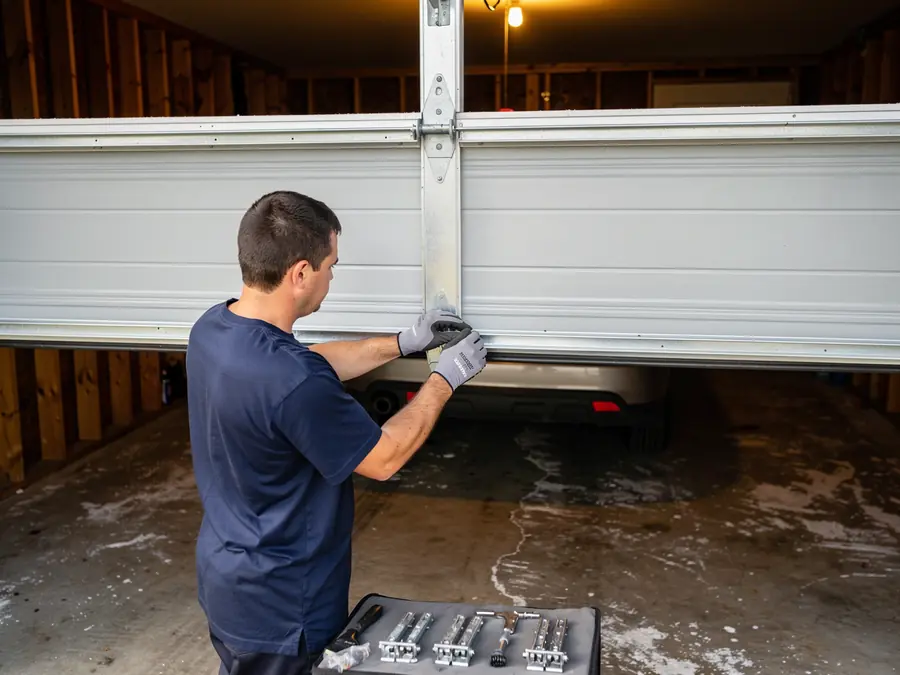
On a torsion-spring door, the fix means unwinding and removing the old spring under controlled tension, checking the shaft, bearing plates, and cable drums for wear while the spring's off, and installing a matched replacement wound to the door's weight and the track's lift ratio.
If it's a double door, we replace both springs together rather than just the broken one - an old spring paired with a new one wears unevenly and tends to fail again inside a year, which just means a second call for the same door.
We also check the cables and rollers while we're in there, since a spring job is the easiest time to catch a fraying cable before it becomes its own emergency.
We don't push a full opener or track replacement on a spring call unless we actually find something wrong with those parts - a spring repair should stay a spring repair when that's all the door needs.
Questions
By 1987, when most Oakdale houses went up, torsion springs over the header had become the standard setup, replacing the older side-mounted extension spring design. The two systems use different hardware and fail differently, so knowing the house's build era tells us which spring and mounting style to expect before we even open the garage.
No. We run out of Maplewood, about four miles away, and drive to Oakdale for every call. There's no separate branch here, just the truck making the short trip.
If one spring breaks on a double door, we replace both. They age at the same rate, and pairing a new spring with an old one usually means the old one fails within a year or two, which costs you a second service call for the same problem.
We don't quote a fixed response time, since it depends on the day's schedule and whether we're carrying the right spring size already. What we can tell you is the drive itself is short - four miles from the Maplewood shop.
Explore more
Ready when you are
Maplewood Garage Door Pros repairs and installs garage doors, springs and openers in Maplewood, MN and the surrounding area.