Older single-bay doors
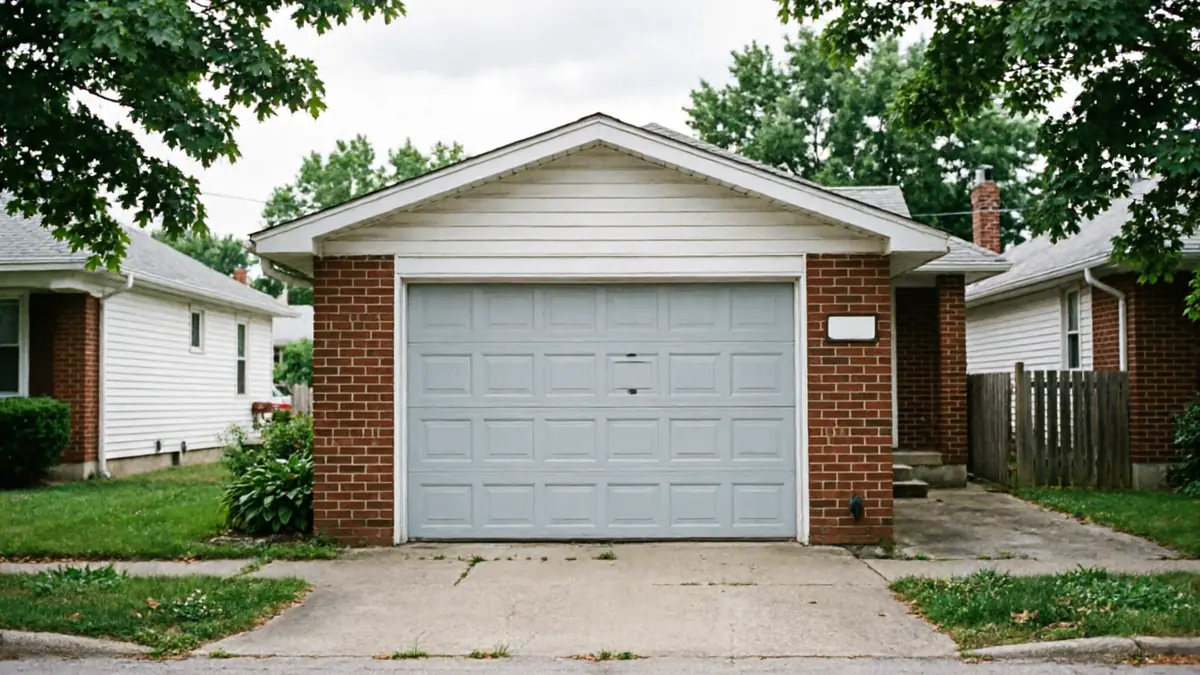
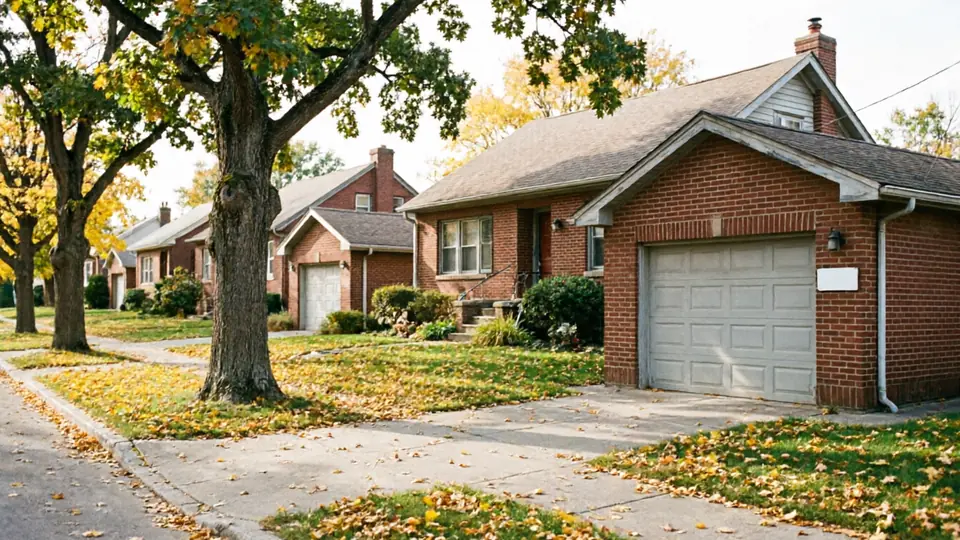
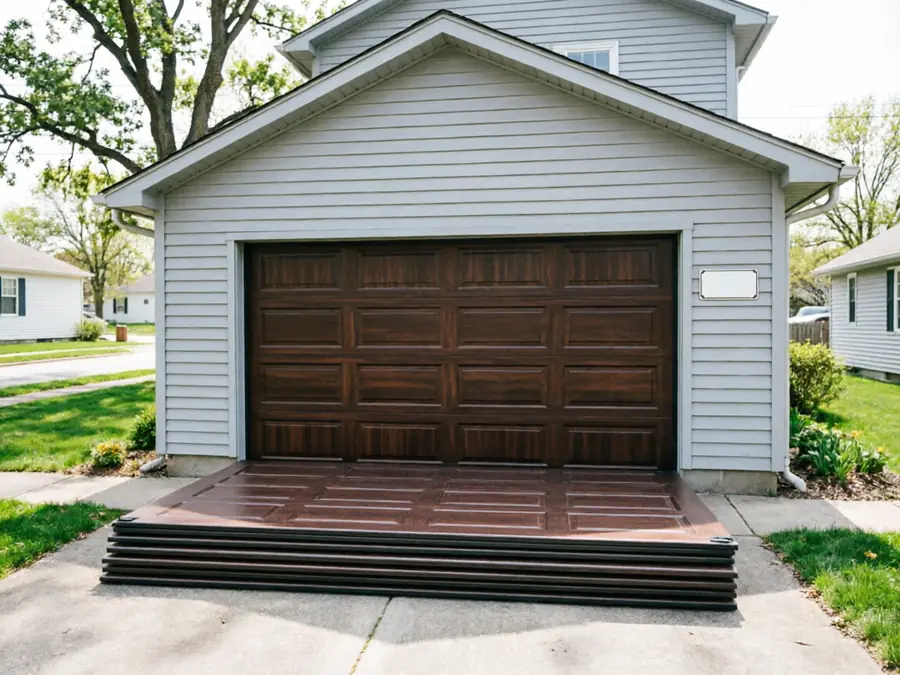
Houses from this run often still carry a single-layer steel door or an older wood panel door, sized for a single bay rather than the wider two-car openings that came later.
Richfield, Maplewood
Richfield homes built around 1959 came with steel or wood panel doors that are now 60-plus years old. We replace damaged panels and match sizing from Maplewood.
Pricing
What you pay depends on what's still under that door. A lot of Richfield's housing went up around 1959, which puts it ahead of the broader service area's 1960s-70s wave - and that earlier build date matters here.
Houses from this run often still carry a single-layer steel door or an older wood panel door, sized for a single bay rather than the wider two-car openings that came later.
Matching a single damaged panel on one of these older doors sometimes means the whole door has to go, because the original panel profile or the wood stock it was cut from simply isn't made anymore.
On a newer sectional door with insulated steel panels, we can usually source a matching panel and swap it without touching the rest of the door. We'll tell you straight which situation you're in before we quote anything, because guessing wrong here wastes your money, not ours.
Downtime
We run from Maplewood, and Richfield sits about 16 miles out, so the drive is part of the timeline - we're not a branch down the street. If your door still closes and locks even with a cracked or dented panel, you're not without security while parts get sourced. If the damage has taken out the bottom panel and the door won't seal, that's a different conversation, and we'll talk about a temporary fix so the opening isn't sitting wide open overnight. Panel sourcing for a 1959-era door can run longer than for a door built in the last fifteen years, simply because fewer suppliers stock that older profile. We won't promise a same-day panel swap on an old wood door when the honest answer is that the part has to be found first.
Local causes
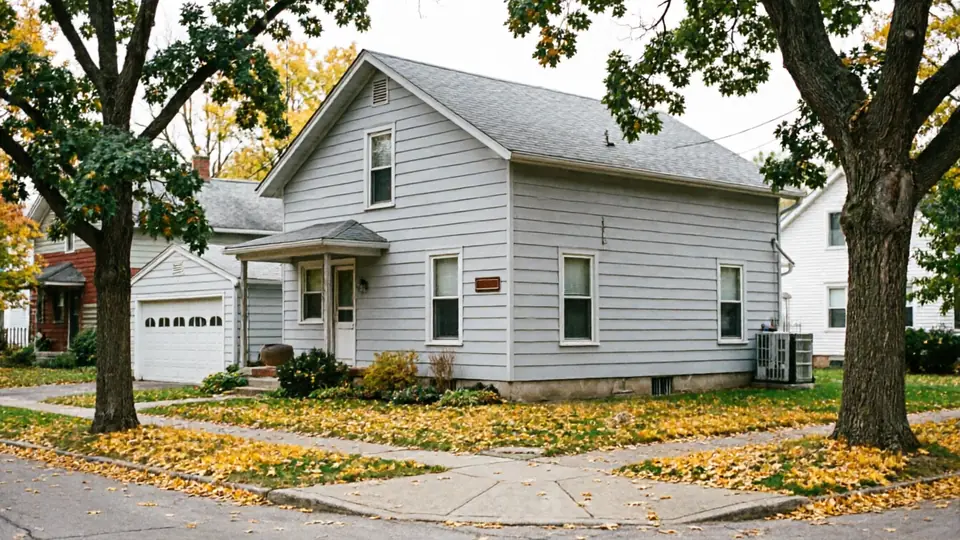
A door built around 1959 has had roughly 65 winters to work on it, and this is a cold-climate area where freeze-thaw cycling is the real enemy, not heat. Steel panels from that era are thinner-gauge than what's made today, and they dent, rust through at the bottom seam, and warp where moisture sits against the track side. Wood panel doors from the same period rot at the bottom rail first, usually where snowmelt and road salt splash up off the driveway. None of this is a defect - it's just what 65-year-old material does in a place that sees real winter. Newer sectional steel doors with foam cores hold up differently, which is part of why the fix looks different depending on which era of house you're standing in front of.
The repair
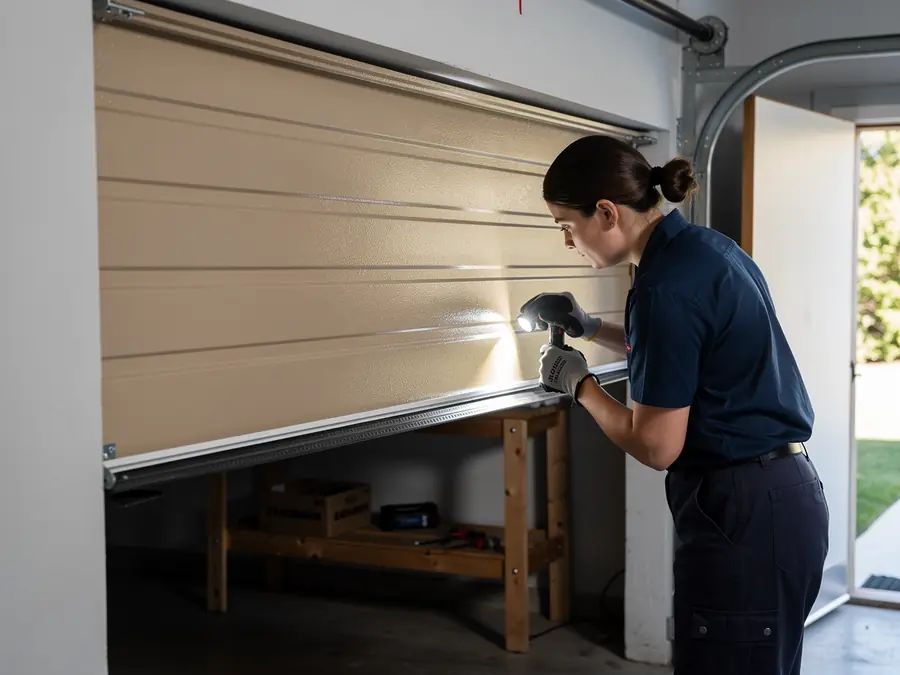
First we identify the door - not just the brand if there is one, but the panel height, the section count, and whether it's a true match-by-model or a measure-and-cut situation, which is common on older single-bay Richfield doors.
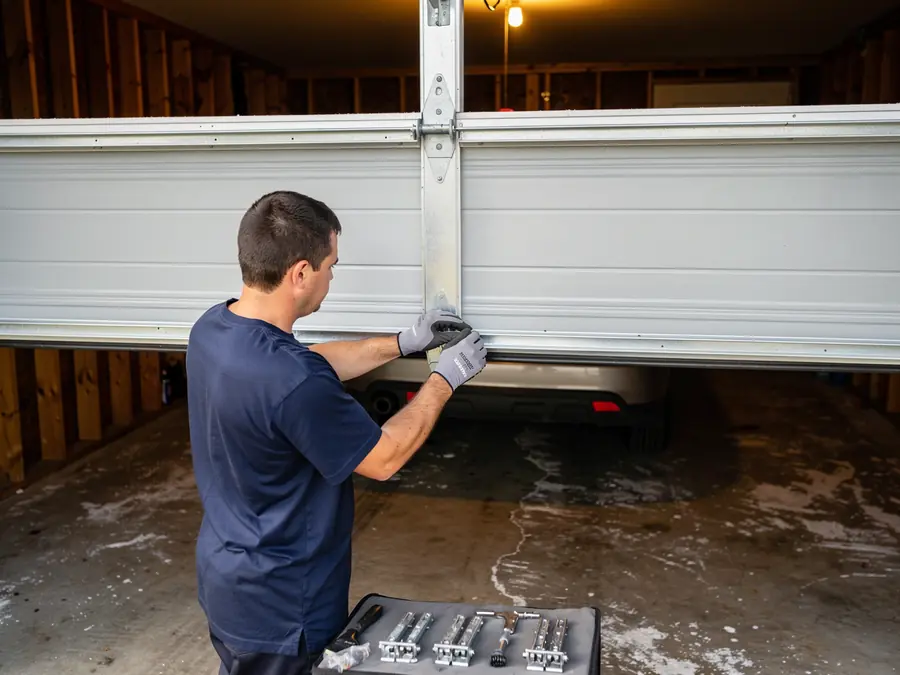
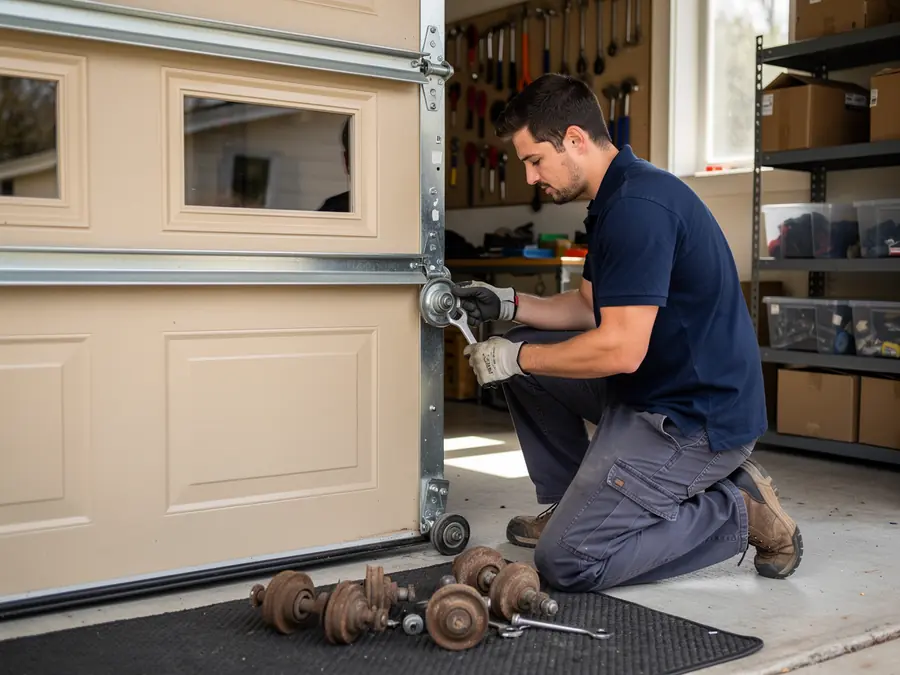
If a matching panel exists, we pull the damaged section, swap hardware (hinges, rollers, the end stiles) onto the new panel, and rehang it, checking that the track alignment hasn't shifted from the old sag. If no match exists, we'll walk you through full door replacement instead, sized to the original single-bay opening rather than a generic wide door.
We don't force a panel fix onto a door where the rest of the structure is too far gone - that's the honest limitation here, and it's cheaper for you to hear it now than after we've ordered a part that won't hold.
Warning signs
Usually it's a dent from a backed-into bumper, a split in the bottom panel where a snowblower or car tire caught the edge, or a long horizontal crack running through a wood panel that's been absorbing moisture for years. Sometimes it's rust blooming through the paint on a steel panel near the bottom seam - that's the metal thinning from the inside out, not a cosmetic issue. On older single-bay doors in this area, we also see panels that have simply warped enough that they no longer sit flush, so the door looks closed but daylight shows at the seams. Any of these is worth a look before winter, since a gap at a bad seam gets worse once it's packed with ice.
DIY or pro
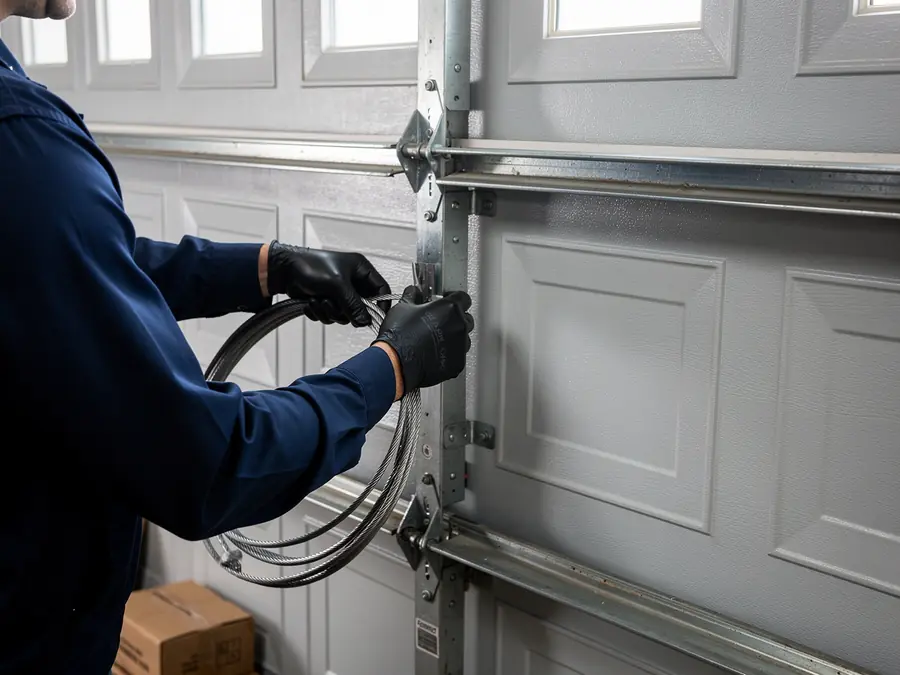
Swapping a single panel sounds simple until you're holding a torsion-loaded door open with no second set of hands. The hardware transfer - hinges, rollers, end stiles - has to come off the old panel in the right order and go back on without bending anything, and on a 1959-era door the fasteners are often rusted enough that they snap rather than back out cleanly. If you're set on doing it yourself, at minimum get the door secured and the spring tension released before you start removing anything. We'd rather talk you through that over the phone than get a call because a panel came loose mid-install.
Questions
It depends on how old the door is and whether the manufacturer or profile still exists. On a lot of Richfield's 1959-era single-bay doors, the original steel or wood panel style isn't made anymore, so a full door often ends up being the real fix. We check this before quoting, not after.
About 16 miles. We travel from Maplewood for the job rather than running a branch location in Richfield, so factor the drive into scheduling, especially for anything time-sensitive like a door that won't close.
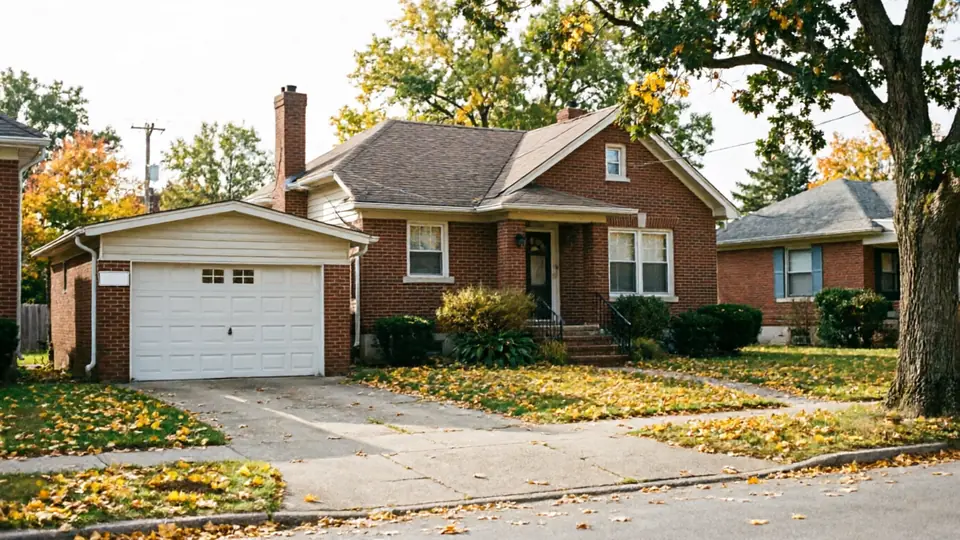
Houses built around that era in Richfield were typically built for one car, before two-car garages became standard. That means the door opening itself is narrower than what you'd find on a house built even ten years later, which limits which replacement doors and panels will physically fit.
Sometimes, if the rest of the door is sound and the damage is isolated. But wood panel doors from the 1950s-60s often have rot spreading beyond what's visible, and once the bottom rail goes, we're usually looking at full replacement rather than a patch.
Explore more
Ready when you are
Maplewood Garage Door Pros repairs and installs garage doors, springs and openers in Maplewood, MN and the surrounding area.