
Rollers worn to stubs
Those wear down to bare stubs over fifty-plus years, and by the time an owner calls, half the rollers on the door are often chipped or missing their bearing entirely.
Richfield, Maplewood
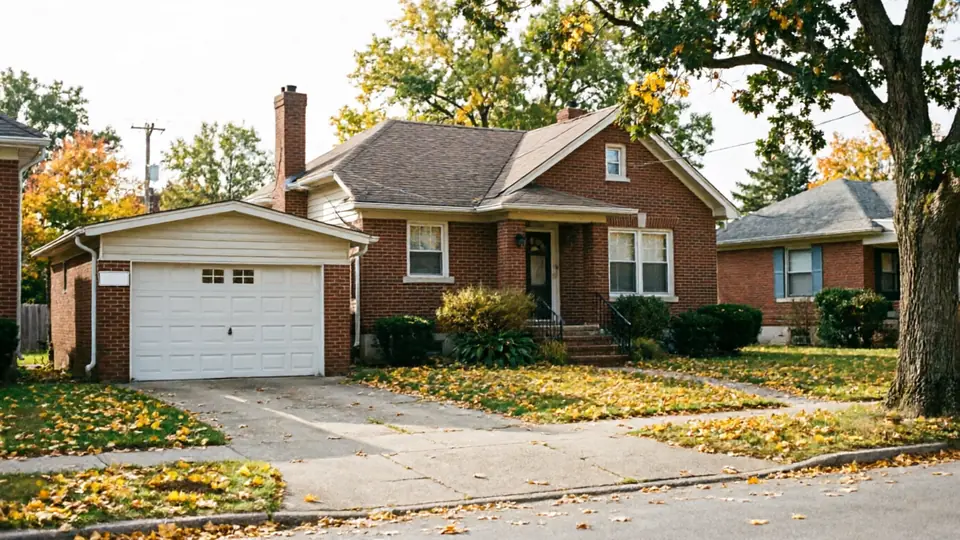
Richfield homes built around 1959 came with steel rollers on raw tracks that wear fast. We travel 16 miles from Maplewood to replace them with sealed nylon.
Pricing
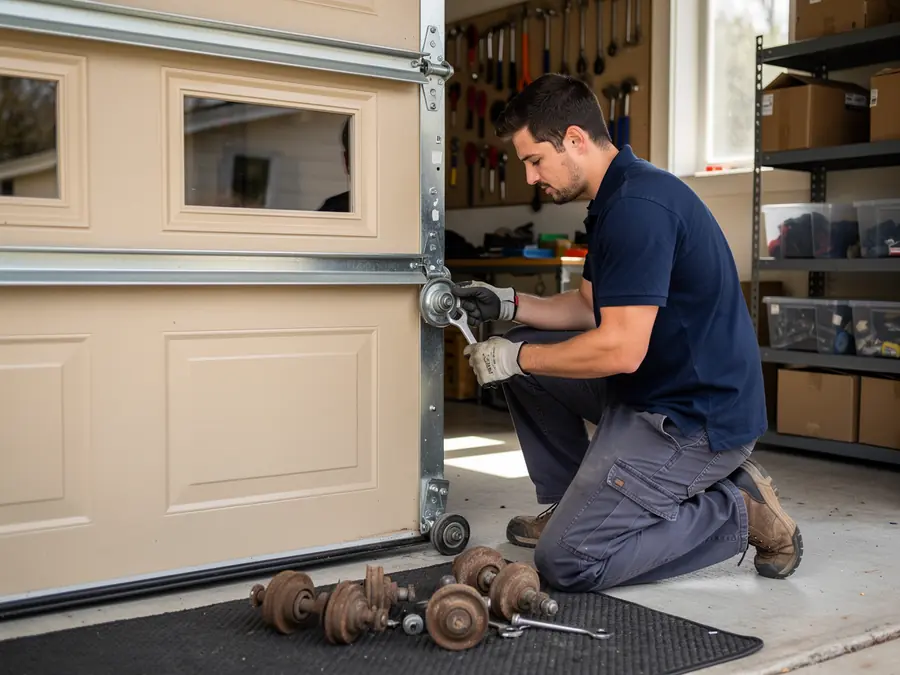
A roller swap on a Richfield door is a parts-and-labor job, not a guess. Most houses here went up around 1959, which means the original door - if it's still the original - runs steel rollers in raw steel tracks with no seal and no lubrication channel.
Those wear down to bare stubs over fifty-plus years, and by the time an owner calls, half the rollers on the door are often chipped or missing their bearing entirely.
We price the job by roller count and whether the track itself needs straightening or replacing, since bent track from a worn roller is common on doors this old. We don't quote a number here because every door's roller count, track condition, and hinge wear differ - that's set at the house, not on a web page.
What we can tell you is that a full 10-roller set with sealed nylon bearings costs less over its life than the steel rollers it replaces, because it won't need the same mid-life adjustment visits.
Downtime
We run this job out of Maplewood, 16 miles from Richfield, so the door doesn't sit broken while a part gets ordered - nylon rollers and matching track sections are stock items we carry on the truck. The work itself, once we're on site, is usually finished in one visit: pull the old rollers, check the track for scoring or bends, swap and adjust. What we can't promise is a same-day window on short notice, since the drive and the rest of the day's schedule both factor in. If your door is stuck shut with the car inside, say so when you call - that changes how we sequence the day, not how long the fix itself takes.
Local causes
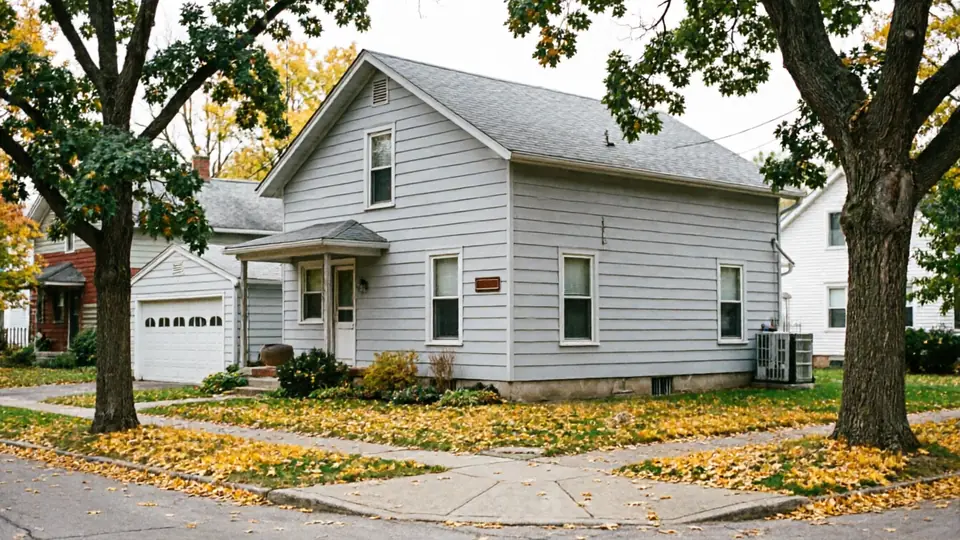
Richfield's housing stock centers on 1959, and that single fact explains most of the roller failures we see on these doors. Builders in that era used solid steel rollers running directly in steel track, no nylon, no sealed bearing, no bushing worth mentioning. Fifty-plus years of Minnesota winters - the area sits in a cold, moderate climate band with real freeze-thaw cycling - means that track has expanded and contracted every season since Eisenhower was in office. Steel rollers in steel track don't tolerate that kind of repeated metal-on-metal flex well; they flatten, chip, and eventually seize. On a lot of Richfield doors we open, the rollers are the original set, which tells you how long steel can limp along before it finally quits - usually at the worst possible moment, mid-cycle, with the door half up.
The repair
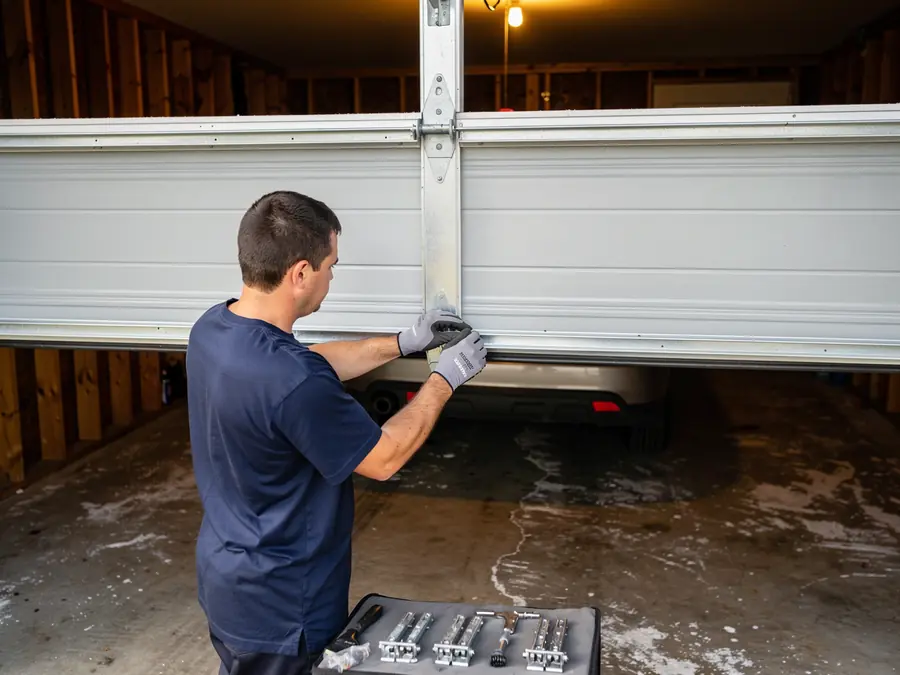
We pull the door panel by panel if the rollers are seized in the track - forcing a frozen roller out can bend the stem and damage the hinge it sits in.
Each roller comes out, the track gets checked for pitting or bowing along its length, and new rollers go in matched to the hinge gauge on that specific door; Richfield's older steel doors often use a heavier hinge than newer stock doors, and mismatched rollers bind instead of rolling.
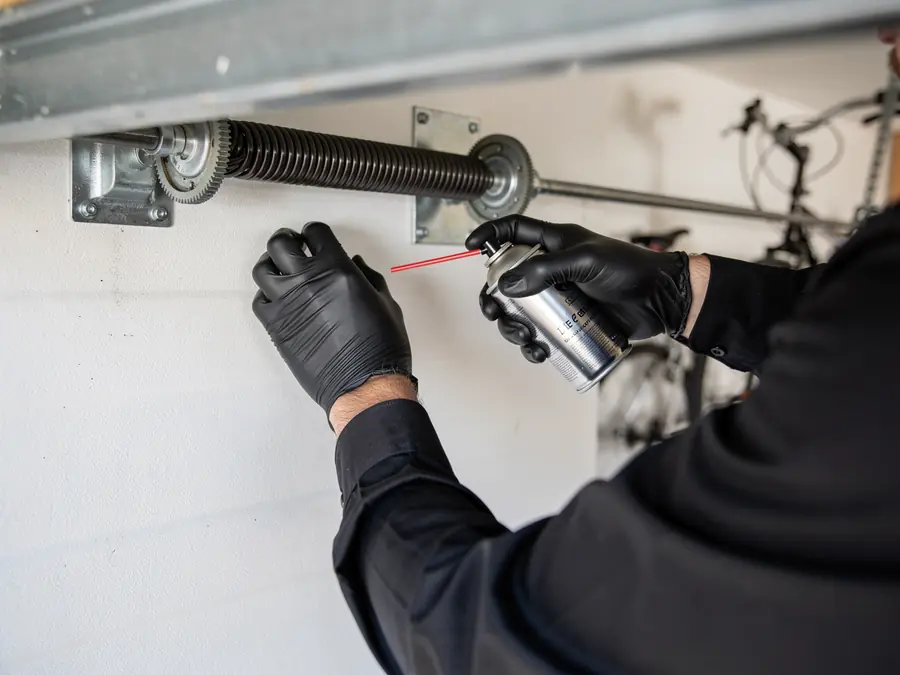
We lubricate the track lightly once the new rollers are set, then run the door through a full cycle under power and by hand to check for drag or noise.
If the track itself is bent beyond a clean straighten, we replace that section rather than mask a bend with a new roller - a straight track is half the fix.
Warning signs
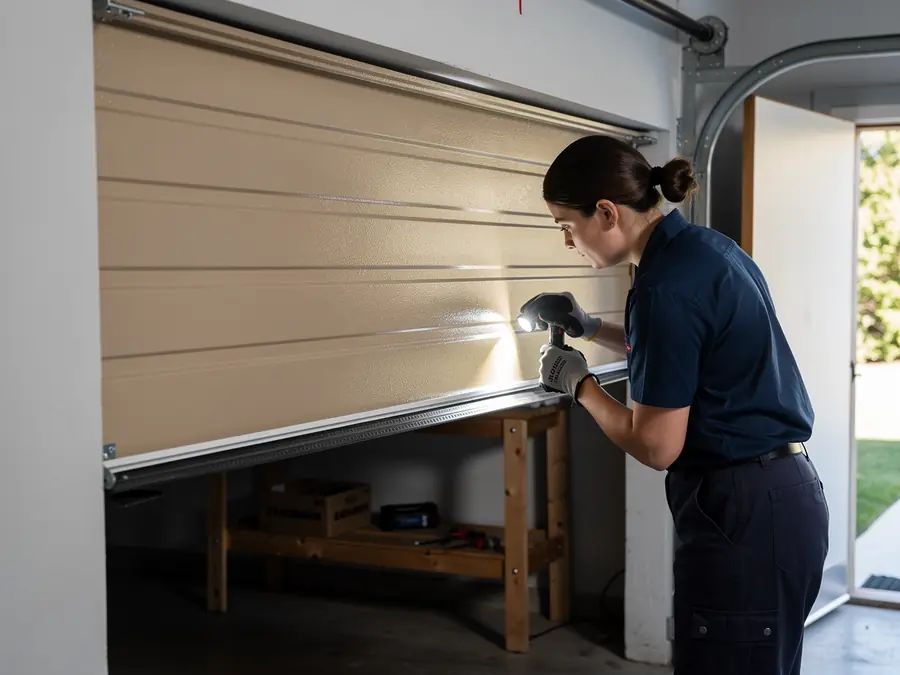
The signs are usually gradual before they're sudden: a grinding or rattling sound as the door travels, especially near the top of the opening where the roller takes the most load reversing direction. Some owners notice the door jerking or hesitating at the same spot every time - that's a flat spot on a worn roller hitting the same point in the track each cycle. On older Richfield doors specifically, we also see rust streaking down the inside of the track where a steel roller has been grinding metal-on-metal for years. If the door comes off the track entirely on one side, stop using the opener and call - that's a roller or hinge failure, not something to run through again.
DIY or pro
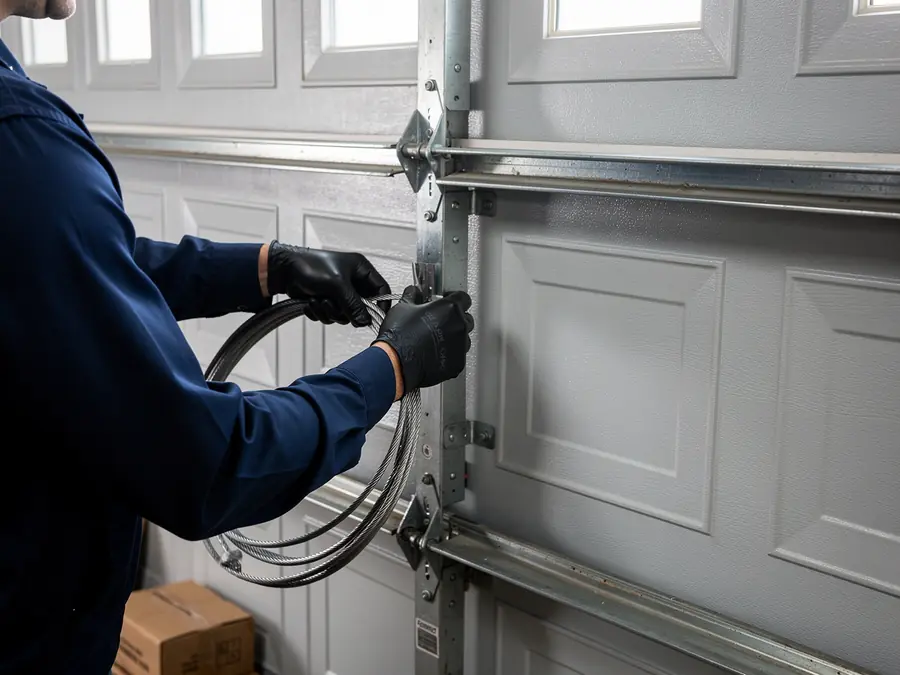
Swapping a single roller on a low panel is within reach for a handy homeowner with the door disconnected and propped safely. What isn't a DIY job is anything involving the two bottom rollers near the cables, or any roller on a door where the spring is still under tension - that's where people get hurt, and we'd rather lose the job than see that happen. If your Richfield door is from the original 1959-era build and still has its factory track, there's also a decent chance the track gauge is no longer a stock size, which means a wrong-fit roller from a hardware store can bind rather than fix anything. That's a case where a quick look from someone who's opened a few of these doors saves a second trip.
Questions
If your house dates to the 1959 era common across Richfield and the door hasn't been replaced, there's a real chance the rollers are original steel-in-steel-track units. They've usually outlived their design life several times over, which is why they fail with grinding noise or a jerking motion rather than all at once.
We carry sealed nylon rollers in the common sizes used on doors from Richfield's building era, plus the stems and bearings to match older heavier hinges. If a track has been bent or narrowed over the years, we check fit on site before installing rather than forcing a mismatched roller in.
We're based in Maplewood, about 16 miles from Richfield. We stock roller sets and track sections on the truck so the drive doesn't turn into a second trip for parts.
You can, but on a door where all the rollers are the same age, the ones you leave usually fail within a season or two of the ones you replaced. We'll tell you honestly if a partial swap makes sense for your situation or if doing the full set now saves a second service call.
Explore more
Ready when you are
Maplewood Garage Door Pros repairs and installs garage doors, springs and openers in Maplewood, MN and the surrounding area.